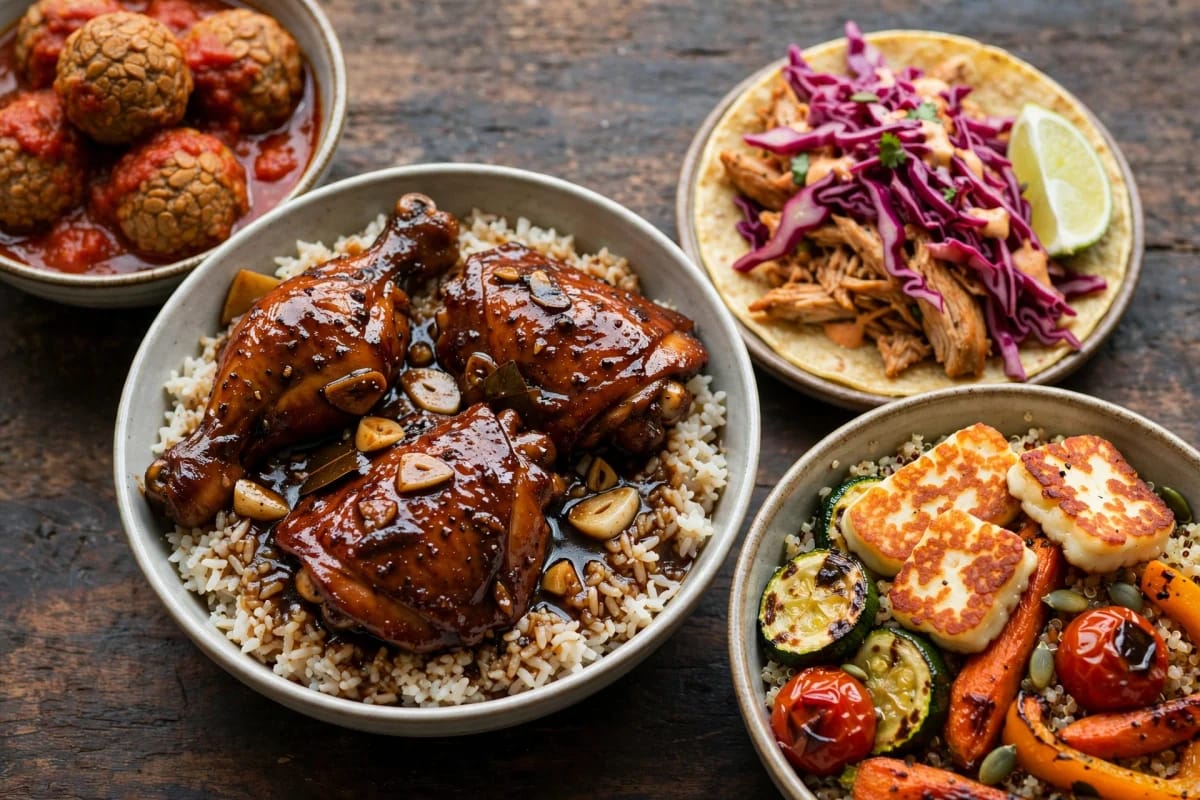
A flexitarian diet is a mostly plant based way of eating that leaves the door open for meat now and then. It borrows the vegetables, beans, and whole grains of a vegetarian plate and adds animal protein occasionally, without any rule about giving it up for good.
A 7 day flexitarian meal plan for beginners is a weekly menu that puts that idea into practice, with breakfast, lunch, dinner, and a snack for every day. Most days are built from plants, a few include chicken or beef, and none of them ask you to cook two separate dinners.
This 7 day flexitarian meal plan for beginners leans on beans, lentils, tofu, tempeh, eggs, yogurt, and plenty of vegetables, with meat appearing on three days only. The one rule that shapes every plate is that plants come first, and the meat, when it shows up, is a supporting act rather than the centre of the plate.
It suits anyone who wants to eat less meat without calling themselves vegetarian, a household where one person is cutting back and everyone else still wants familiar food, and cooks who are tired of building dinner around a protein. If you are pregnant, managing iron deficiency, or following a medical diet, talk to your doctor or a dietitian before you cut back on animal foods.
The reason to try it is variety. Beans and lentils bring fiber that keeps you full, tofu and tempeh carry protein without much saturated fat, and a plate built from several plants gives you more vitamins than one built around a single chop, which is the pattern behind a mostly plant plate. None of that promises a health outcome, it is simply a way of eating that most people find easier to keep than a strict rule.
Use the week however it suits you. Cook the days out of order, repeat the ones that worked, and move a meat dinner to whichever evening you actually have time to cook it. The menu is a set of options, not a timetable.
Key Principles of a Flexitarian Diet
A flexitarian diet is less about banning foods and more about shifting the balance of the plate toward plants. These are the rules that make the pattern work, and each one leaves room for real life, which is why beginners tend to stick with it.
1. Put Plants First
Every meal starts with the vegetables, beans, grains, or fruit, and the animal protein is added afterwards if it belongs there at all. That order changes portions without anyone feeling shortchanged, because a full plate of plants is genuinely filling. Think of meat as a flavour rather than the main event.
2. Keep Meat to Three Days a Week
Three days with meat leaves four days where plants and eggs carry the plate, which is enough to shift your diet without turning it into a project. The meat days do not need to be spread evenly, so a roast on a day with family and a takeaway on a busy evening both count. What matters is the weekly total, not the pattern.
3. Build Protein From Beans, Tofu, and Dairy
Lentils, chickpeas, black beans, tofu, tempeh, eggs, yogurt, and cheese all carry enough protein to anchor a meal. Combining beans with grains gives you a complete protein picture, and soy foods like tofu and tempeh stand in for meat in texture as well as nutrition. A plant day should never feel like a side dish day.
4. Treat Fish and Eggs as Everyday Options
Flexitarian eating is not vegan eating, so fish and eggs can appear on plant days without breaking any rule. They are useful when you want protein with very little cooking, and they keep the week from turning into a bean rotation. Choose fish twice a week where you can.
5. Cook One Meal, Not Two
The fastest way to abandon this pattern is to cook a vegetarian dinner and a separate chicken breast for someone else. Build a plant base everyone shares, then add the meat portion to one pan at the end. One pot, one sauce, and no negotiations at the table.
6. Watch Iron and B12
Plant iron is absorbed less easily than the iron in meat, so pair beans and greens with something rich in vitamin C, like lemon, tomato, or peppers. B12 comes mostly from animal foods, so eggs, dairy, and fish earn their place here. If you go fully plant for months, ask your doctor about the gaps rather than guessing.
A flexitarian diet is a flexible eating pattern rather than a medical prescription, and it is not a vegan diet with exceptions. Anyone with a diagnosed deficiency or a condition that shapes their food should set the details with their clinician.
Your 7 Day Flexitarian Meal Plan for Beginners Overview
This 7 day flexitarian meal plan for beginners features easy recipes and the diet's named foods leaning on beans, lentils, tofu, tempeh, and vegetables, carrying the foods that keep four days fully plant based, and it is perfect for beginners and busy families who want to eat less meat without a strict rulebook.
Day 1
Breakfast:
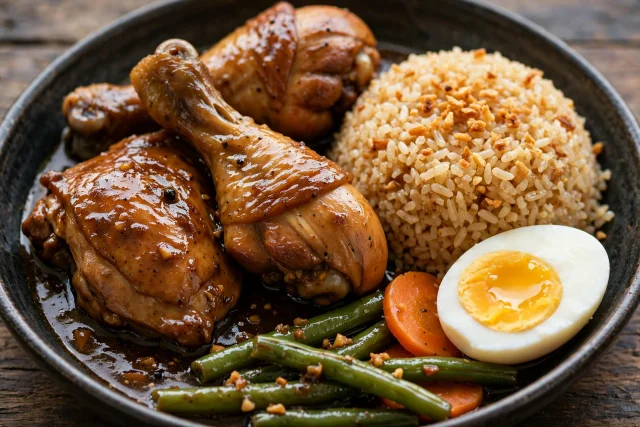
- Garlic Fried Rice with Egg: Day old rice fries with plenty of garlic until the edges catch, then takes a fried egg and a pinch of salt on top. It is the breakfast that makes a quiet morning feel sorted, and it costs almost nothing to put together.
Lunch:
- Vegetable Pancit Noodles: Thin rice noodles stir fry with cabbage, carrot, and a splash of soy, finished with lemon or calamansi. It eats like a leisurely lunch but takes fifteen minutes, which is exactly the point on a working day.
Dinner:
- Chicken Adobo with Garlic Rice: Chicken thighs braise in vinegar, soy, garlic, and bay until the sauce turns dark and glossy, then get spooned over fried garlic rice. This is the first meat night of the week, and the leftovers are better the next day.
Snacks:
- Mango Slices with Toasted Coconut: Ripe mango with toasted coconut flakes and a squeeze of lime. Two minutes of assembly, tropical and sweet, and it stands in for dessert without anyone at the table noticing.
Day 2
Breakfast:
- Kimchi Fried Rice with a Fried Egg: Cold rice fries with chopped kimchi, a spoon of its brine, and a fried egg on top. The heat wakes you up, the egg keeps you full, and the whole pan takes ten minutes.
Lunch:
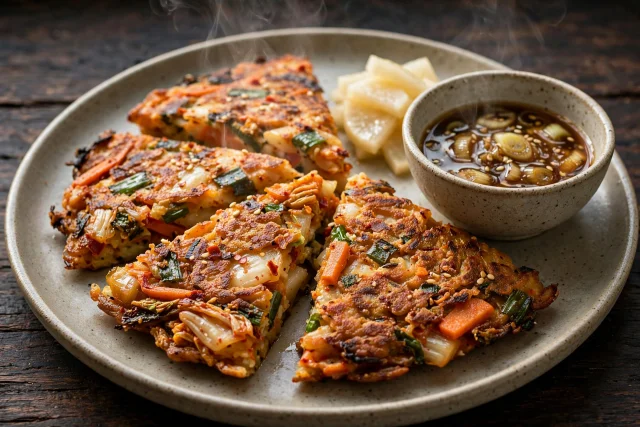
- Kimchi Vegetable Pancakes: Crisp edged pancakes packed with kimchi, carrot, and scallion, served with a soy dipping sauce. They are the reason to keep a jar of kimchi in the fridge, and they eat well cold the next day.
Dinner:
- Spicy Soft Tofu Stew with Mushrooms: Silken tofu simmers with mushrooms, scallion, and a mild chili broth, served with rice on the side. It is plant protein that feels substantial, and it comes together in one pot on a night when nobody wants to cook.
Snacks:
- Japchae Glass Noodles with Sesame: Sweet potato noodles tossed with spinach, carrot, and sesame oil. It is a snack that eats like a small meal, and it keeps for two days in the fridge without turning soft.
Day 3
Breakfast:
- Ricotta and Honey Toast: Thick toast spread with whipped ricotta, honey, and a little lemon zest. It is a two minute breakfast that feels like a cafe order, and it keeps you going until a proper lunch.
Lunch:
- Farro Salad with Roasted Peppers and Mozzarella: Chewy farro tossed with sweet roasted peppers, mozzarella, and basil in a lemon dressing. It holds up in a lunchbox and proves that plant food can be generous rather than apologetic.
Dinner:
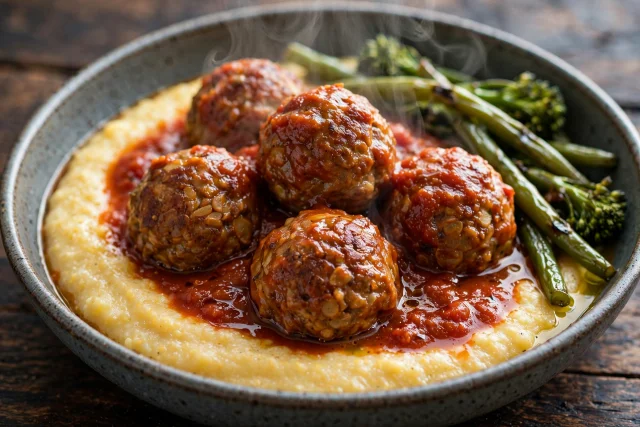
- Tempeh Meatballs with Marinara: Grated tempeh and oats roll into meatballs, brown in a pan, and finish in tomato sauce over soft polenta. Nobody at the table will call this a compromise, and the sauce tastes better on the second day.
Snacks:
- Roasted Chickpeas with Rosemary: Chickpeas roasted until they rattle in the tray, then tossed with rosemary and salt. The crunch replaces crisps and the protein keeps the afternoon steady instead of spiking and dipping.
Day 4
Breakfast:
- Greek Yogurt with Berries and Granola: Thick yogurt with berries, granola, and a drizzle of honey. It is the fast breakfast that carries you through a busy morning without a second thought about food.
Lunch:
- Lentil and Vegetable Soup with Sourdough: Lentils simmer with carrot, celery, and tomato until the pot turns thick, served with a slice of sourdough. It is a plant lunch on a meat day, which is exactly how flexitarian eating is meant to work.
Dinner:
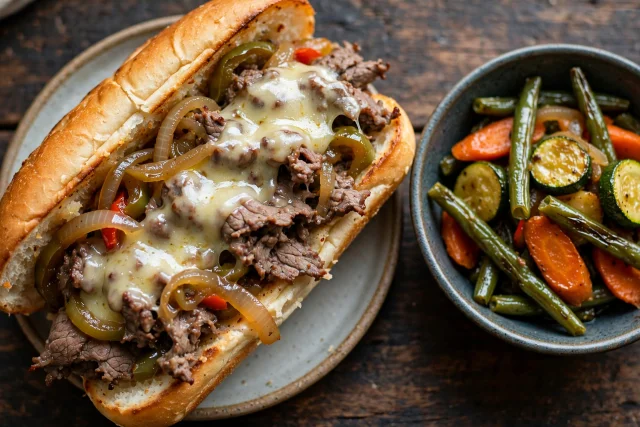
- Philly Cheesesteak Sandwich: Thin shaved beef and soft onions griddle together, then get tucked into a roll with melted provolone. It is the indulgent dinner of the week, one is plenty, and the peppers on the side keep it from feeling heavy.
Snacks:
- Apple with Peanut Butter: A crisp apple cut into wedges with a spoon of peanut butter for dipping. It survives a commute, costs very little, and stops the vending machine from winning at four in the afternoon.
Day 5
Breakfast:
- Eggs with Tomatoes and Peppers: Eggs gently scrambled into soft tomatoes and peppers with a little cumin and a spoon of olive oil. It is a Turkish breakfast that makes a plain morning feel cared for, and it takes one pan and ten minutes.
Lunch:
- Bulgur Salad with Pomegranate and Herbs: Fine bulgur soaked with tomato paste and pepper, tossed with parsley, mint, and pomegranate seeds. It is sharp and herby, and it gets better after an hour in the fridge.
Dinner:
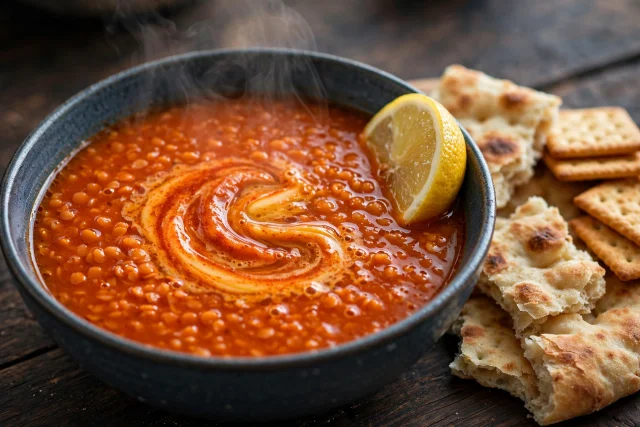
- Turkish Red Lentil Soup: Red lentils cook down with onion, carrot, and a spoon of tomato paste until the soup turns smooth, served with lemon and flatbread. It is cheap, filling, and the kind of dinner you end up making twice a month.
Snacks:
- Hummus with Carrot Sticks: A bowl of hummus with carrot and cucumber sticks for scooping, plus a drizzle of olive oil and a dust of paprika. It feels like a small mezze plate, needs no cooking, and keeps everyone out of the biscuit tin.
Day 6
Breakfast:
- Black Bean and Cheese Quesadilla: Mashed black beans and cheese pressed in a tortilla until the outside crisps, with salsa for dipping. It eats like a treat at breakfast and holds you until a late lunch.
Lunch:
- Charred Corn and Avocado Salad: Corn charred in a hot pan with avocado, lime, coriander, and a little chili. It is a salad that eats like a meal, and it comes together in the time it takes to boil a kettle.
Dinner:
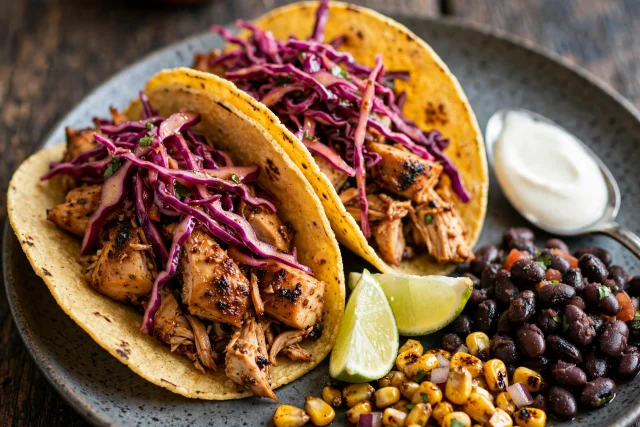
- Chipotle Chicken Tacos with Cabbage Slaw: Chicken thighs rubbed with chipotle and lime, seared, and piled into tortillas with crunchy slaw. This is the second meat night, and it earns its place with very little effort.
Snacks:
- Watermelon with Chili and Lime: Cold watermelon with chili powder and lime juice. It is the snack for a warm afternoon, it costs almost nothing, and it satisfies a sweet craving better than most things in a packet.
Day 7
Breakfast:
- Vegetable Upma with Peanuts: Semolina toasted with mustard seed, curry leaf, carrot, and peas, finished with peanuts. It is a savoury breakfast that keeps you full well past ten, and it uses up whatever vegetables are left.
Lunch:
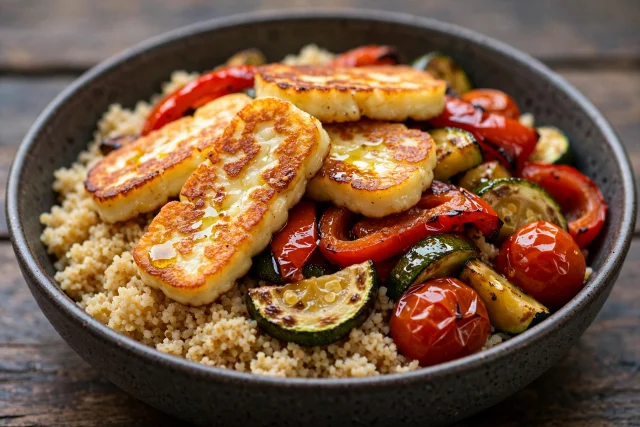
- Halloumi and Roasted Vegetable Grain Bowl: Grilled halloumi over grains with roasted peppers, zucchini, and tomatoes. It is the lunch that makes a plant day feel like a treat, and it packs well if you keep the dressing separate.
Dinner:
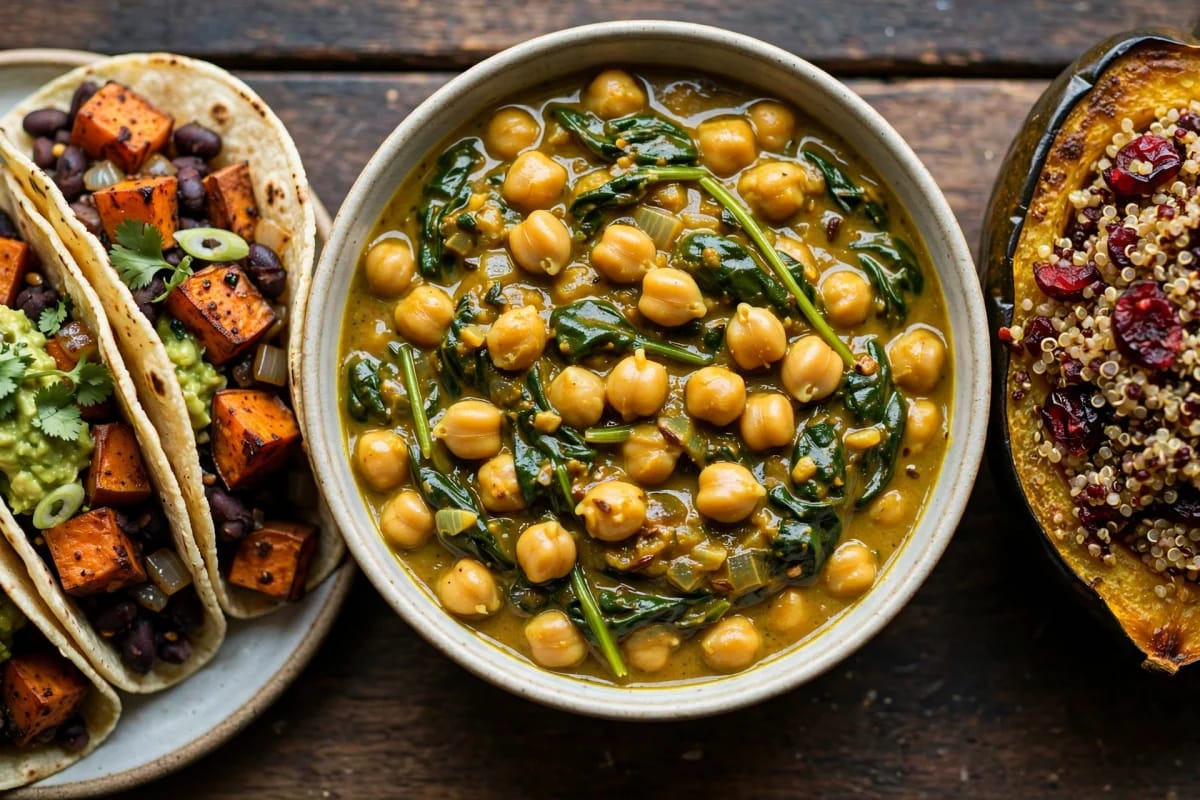
- Chickpea and Spinach Curry with Brown Rice: Chickpeas and spinach simmer in a tomato and ginger sauce, served over brown rice. It is the last dinner of the week and the cheapest one, and it freezes well if you double it.
Snacks:
- Rose and Cardamom Lassi: Yogurt blended with rose syrup, cardamom, and ice until it turns pale pink and frothy. It is cooling and slightly sweet, and it is the right end to a spiced dinner on a warm evening.
Your Flexitarian Diet Food List
The list below covers every dish in the week, with the meat bought in small quantities because three dinners is all you need. Everything else comes from the plant side of the shop, which is where the value is, and the beans and grains carry over into the following week.
Fruits
- Fresh and Ripe: Mango, apples, watermelon, and berries (the coconut snack, the peanut butter snack, the chili watermelon, and the yogurt bowl).
- Citrus and Pomegranate: Lemons, limes, and one pomegranate (the dressings, the slaw, the bulgur salad, and the soup).
Vegetables
- Greens and Alliums: Spinach, cabbage, scallion, onion, garlic, and mushrooms (the stew, the curry, the noodles, the pancakes, and the slaw).
- Roots and Peppers: Carrots, zucchini, peppers, tomatoes, and cucumber (the bowls, the salads, the eggs, the hummus, and the sheet pan vegetables).
- Corn and Avocado: Sweetcorn and two ripe avocados (the charred corn salad).
Proteins
- Poultry and Beef: Chicken thighs and thin shaved beef (the adobo, the tacos, and the sandwich, three dinners only).
- Soy and Tempeh: Silken tofu and one block of tempeh (the stew and the meatballs).
- Beans and Lentils: Red lentils, brown lentils, chickpeas, and black beans (the soups, the curry, the quesadilla, and the snack).
- Eggs and Cheese: Eggs, halloumi, mozzarella, provolone, and ricotta (the breakfasts, the bowl, the salad, the toast, and the sandwich).
Grains and Bakery
- Rice and Noodles: Jasmine rice, brown rice, rice noodles, and sweet potato glass noodles (the fried rice, the curry, the pancit, and the snack).
- Grains: Farro, bulgur, semolina, rolled oats, and granola (the salad, the upma, the meatballs, and the yogurt bowl).
- Bread and Tortillas: Sourdough, sandwich rolls, thick sliced toast bread, corn tortillas, and flatbread (the toast, the sandwich, the tacos, and the soup).
Dairy and Refrigerated
- Yogurt: Greek yogurt and plain yogurt (the breakfast bowl and the lassi).
- Cheese: Ricotta, halloumi, mozzarella, provolone, and a hard cheese for grating (the toast, the bowl, the salad, and the sandwich).
- Butter and Eggs: Salted butter and a dozen eggs (the breakfasts, the fried rice, and the upma).
Pantry and Flavorings
- Condiments: Soy sauce, vinegar, kimchi, tomato paste, mild chili paste, and peanut butter (the adobo, the pancakes, the stew, the soups, and the snack).
- Spices and Herbs: Cumin, chipotle powder, chili powder, curry leaf, mustard seed, cardamom, bay, rosemary, basil, parsley, mint, and coriander (the whole week).
- Oils and Sweeteners: Olive oil, sesame oil, honey, and rose syrup (the roasting, the noodles, the toast, and the lassi).
- Nuts and Seeds: Peanuts, sesame seeds, and coconut flakes (the upma, the noodles, and the mango snack).
Easy Flexitarian Diet Swaps for Meat-Free Nights
The swaps below answer the moments when a plant dinner feels like it is missing something. Each one keeps the texture or the savoury hit you were after, and everything on the list comes from a shelf the grocery list above already covers, so nothing goes to waste.
- When You Want Something Meaty: Crumble tempeh or brown lentils into the marinara instead of reaching for mince. Both take on the sauce, and the tempeh version holds its shape in a sandwich the next day.
- When Dinner Needs to Be Faster: Trade the tofu stew for the black bean quesadilla and a handful of spinach. You lose the pot and keep the protein, and the washing up is one pan.
- When You Crave Something Crisp: Roast the chickpeas a little longer and eat them warm with the cabbage slaw. The crunch arrives without opening a bag of crisps.
- When You Are Feeding Meat Eaters: Keep the plant base and add a grilled chicken thigh to one plate only. Nobody cooks twice, and the table still feels like one meal.
- When You Are Eating Out: Order two vegetable sides and a bean dish rather than a main with meat. It is cheaper, it is usually more interesting, and it keeps the week's balance without a lecture to the waiter.
How to Start a Flexitarian Diet Without Missing Meat
Begin with the meals you already cook and swap one ingredient rather than the whole plate, so the first week feels like a variation instead of a resignation. The adobo and the tacos stay as they are, and the plant days carry the new cooking.
Keep a jar of kimchi, a block of tempeh, and a bag of lentils in the cupboard, since those three cover most emergencies and most of the plant dinners here. Once a meatless dinner stops feeling like a compromise, the rest of the pattern follows on its own.
Keep exploring with our plant only week with no animal foods at all, fish led days that skip meat entirely, a faith shaped week of simple plant meals, and a fortnight built on minimally processed food, alongside a cheesesteak worth saving for the weekend and a Filipino adobo that rewards a long braise.
This article is for information only and is not medical advice. Read our full disclaimer.