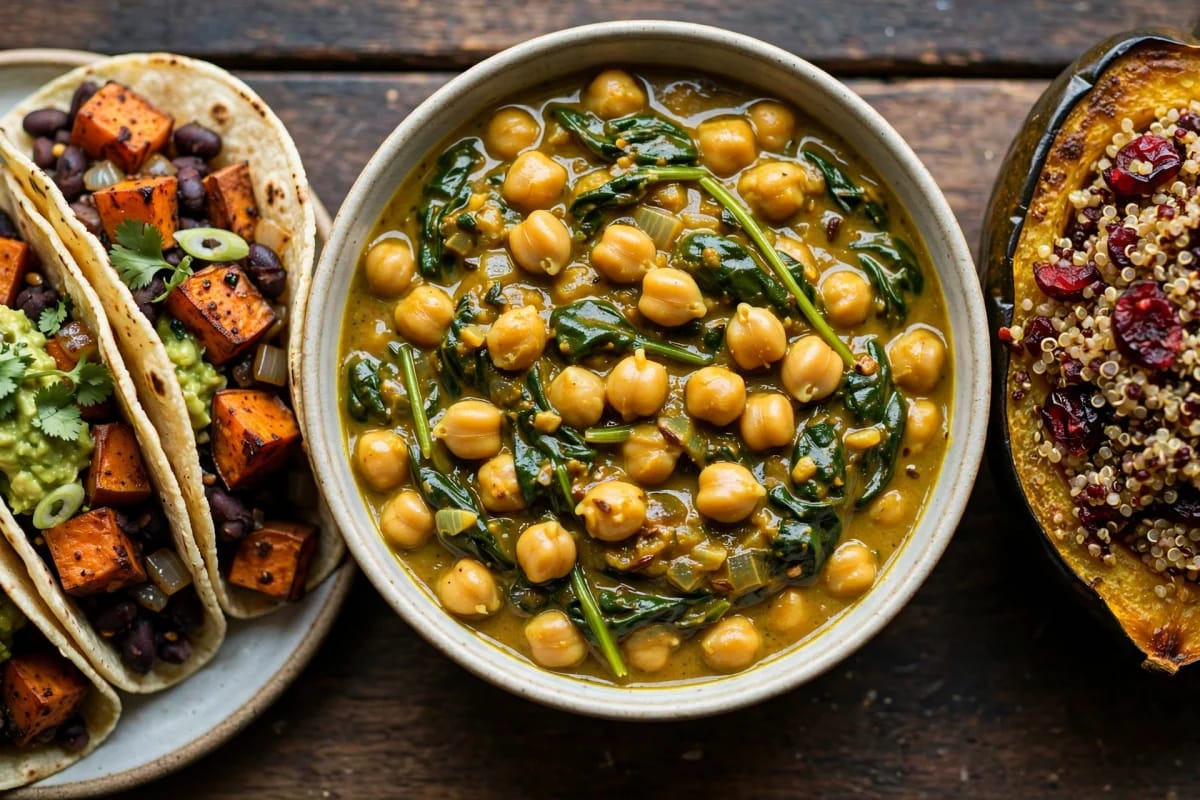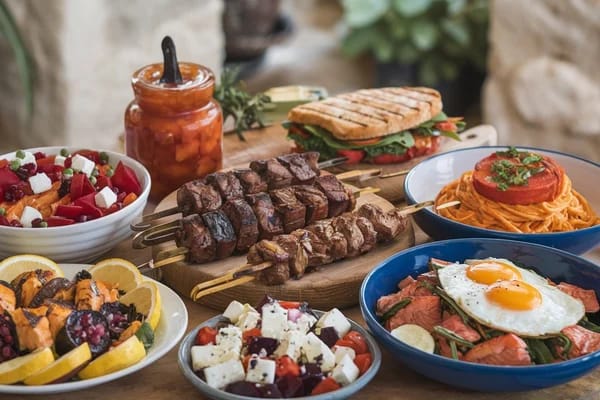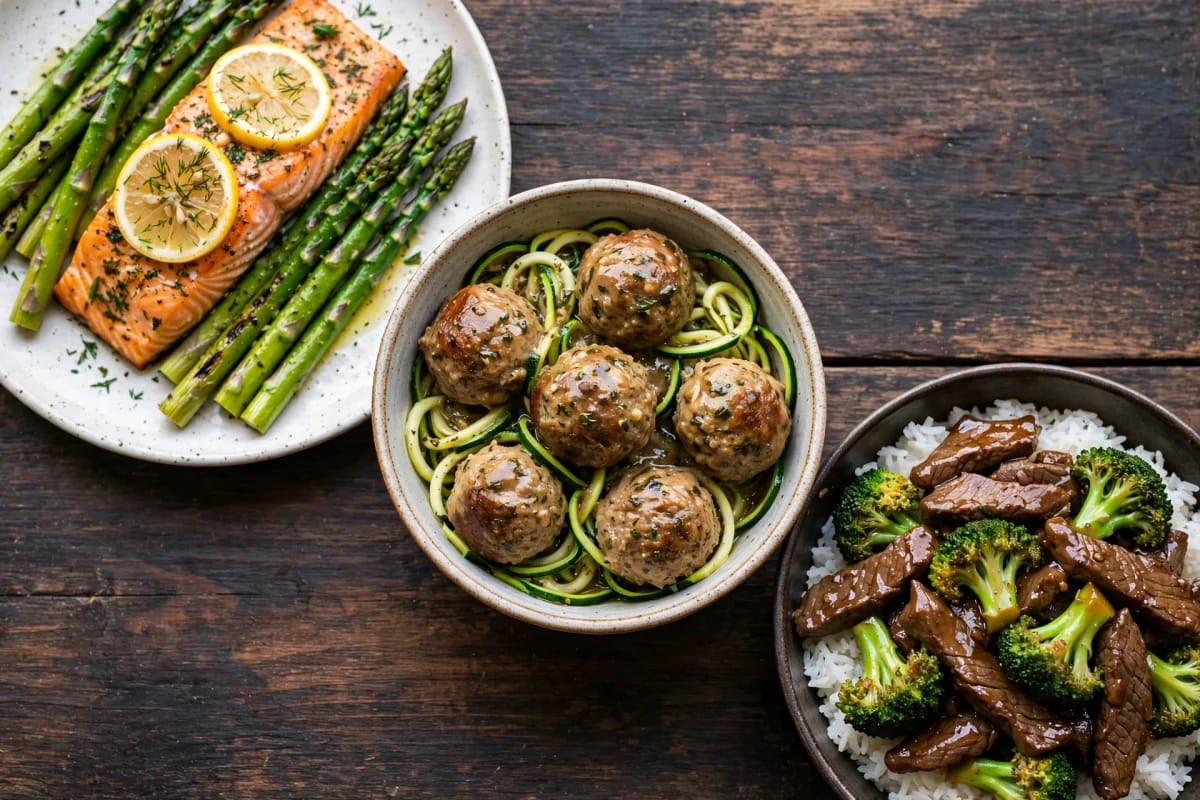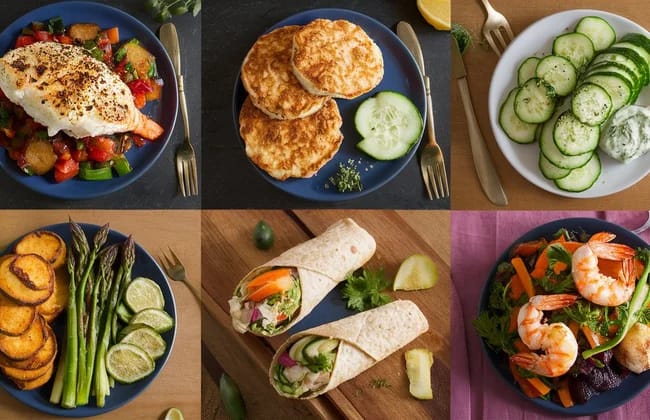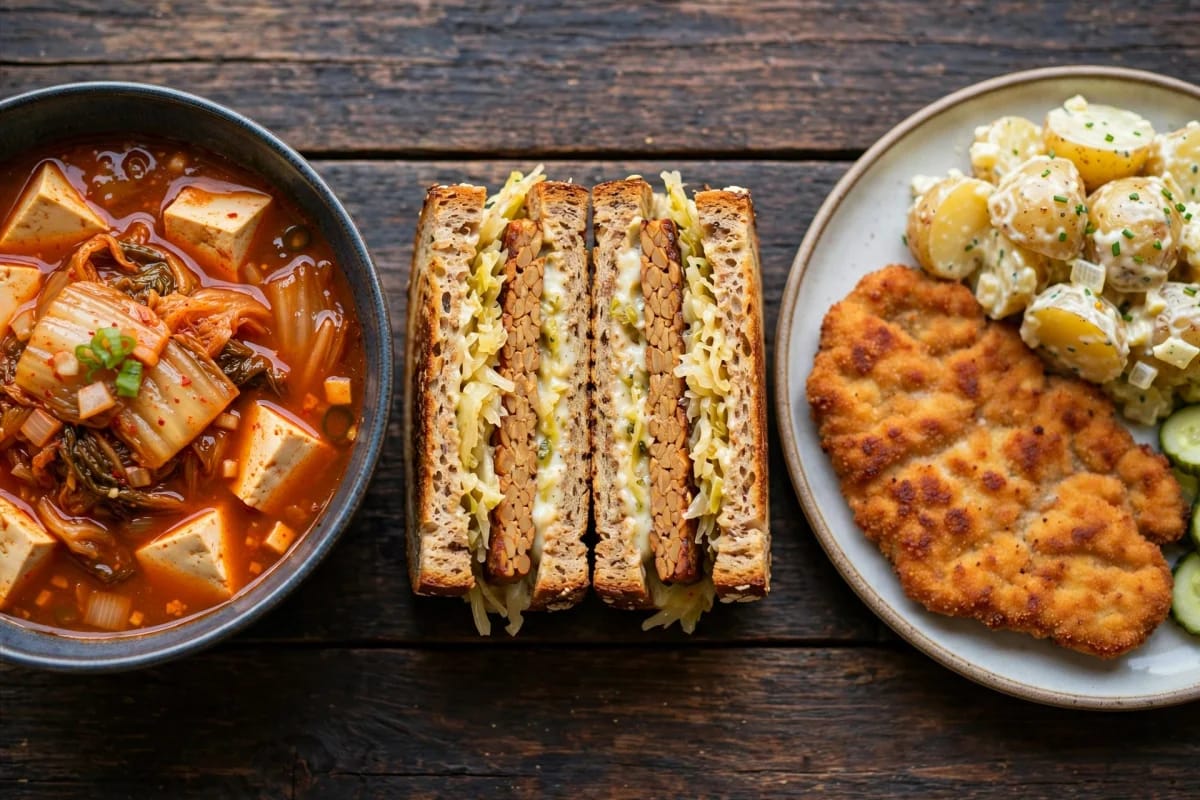
Fermented foods are foods that have been changed by live cultures, the way cabbage turns into sauerkraut and milk turns into kefir. The cultures eat sugar and starch and produce acid, which preserves the food and gives it a sour, savoury flavour that plain ingredients never reach.
A 7 day fermented foods meal plan for beginners is a weekly eating plan that puts one of those foods on the table every day. It covers breakfast, lunch, dinner, and snacks, and it starts with small portions so your palate and your stomach can get used to the taste.
The week draws on kimchi, sauerkraut, kefir, miso, tempeh, yogurt, and a few fermented batters, alongside rice, noodles, bread, eggs, fish, meat, beans, and plenty of vegetables. The one rule that shapes every day is simple. One named fermented food, eaten at least once, every single day.
It suits anyone curious about fermented food who has never bought a jar, cooks who want more flavour without more salt, and households eating more plants. If you are immunocompromised, pregnant, or sensitive to histamine, talk to your doctor before adding unpasteurised ferments, and read the guidance on digestive conditions if you manage one.
The reason to try it is flavour first, and that is honest enough on its own. Fermented foods bring acidity and depth to plain ingredients, they keep for months in the fridge, and many of them carry live cultures plus the fibre and protein of the food they started as. This is food, not medicine.
Run the days in whatever order suits your week. Repeat the kimchi breakfast three times if you love it, skip the tempeh if you cannot find it, and halve every portion in the first few days. This fermented foods meal plan is a set of introductions, and you are allowed to move slowly through it.
Key Principles of a Fermented Foods Diet
A fermented foods diet is less about cutting things out and more about adding live, cultured food to meals you already eat. These five habits keep it enjoyable rather than overwhelming.
1. Eat One Fermented Food Every Day
Consistency matters more than volume, so a forkful of sauerkraut at lunch counts as much as a bowl of kimchi stew. Pick the meal where it fits naturally, whether that is breakfast or the side of a dinner plate. Missing a day is not a failure, it just means the next meal gets the jar.
2. Start With a Spoon, Not a Jar
A tablespoon of sauerkraut or half a glass of kefir is a sensible first week, especially if your gut is not used to live cultures. Increase slowly over a fortnight and notice how you feel. Jumping straight into a large bowl is the fastest way to decide you dislike something.
3. Keep the Culture Alive
Look for jars in the chilled section that say raw or unpasteurised, since heat treatment kills the cultures you came for. Keep them cold, use a clean fork, and never tip the jar into a hot pan at the end of cooking. Warm the dish first, then add the ferment off the heat.
4. Pair Ferments With Fibre
Fermented foods work best next to the plants that feed a gut, so serve them with beans, oats, barley, cabbage, onions, or fruit. Fibre is the other half of the picture, and live cultures and a plant heavy diet work best together. A spoon of kimchi on plain rice is fine, and a spoon of kimchi on rice with greens and sesame is better. The pairing is what turns a condiment into a meal.
5. Rotate the Cultures Across the Week
Kimchi, sauerkraut, kefir, miso, and tempeh each bring a different mix of cultures and flavours, so a week that uses all five is more interesting than a week of one jar. Rotating also keeps you from tiring of a single taste. Buy small jars until you know which ones you finish.
Fermented foods are food rather than treatment, and nothing here treats a condition. Anyone with a compromised immune system should take medical advice before eating unpasteurised ferments.
Your 7 Day Fermented Foods Meal Plan for Beginners Overview
This 7 day fermented foods meal plan for beginners features easy recipes and fermented foods leaning on kimchi, sauerkraut, kefir, miso, and tempeh, carrying the daily culture habit that makes the week work, and it is perfect for beginners and busy families.

Day 1
Breakfast:
- Kimchi and Scallion Rice Bowl with a Fried Egg: Hot rice topped with kimchi, sliced scallions, a fried egg, and a drizzle of sesame oil. It is the gentlest way into a jar of kimchi, because the rice softens the sourness and the egg makes it a proper meal.
Lunch:
- Kimchi Jjigae with Tofu and Rice: Kimchi simmered with pork belly, tofu, and gochugaru until the broth turns deep red and sour. It is the dish that teaches you how much flavour a jar can carry, and it comes together in one pot.
Dinner:
- Doenjang Braised Tofu with Rice and Greens: Tofu simmered in a fermented soybean paste broth with zucchini, onion, and garlic, served over rice with blanched greens. Doenjang is the quiet ferment of the week, salty and deep rather than sour.
Snacks:
- Kimchi Cucumber Spears: Cucumber cut into spears and spooned with chopped kimchi and its juice. It is a two minute snack with crunch, salt, and a little heat, and it uses up the last of the jar before it goes soft.
Day 2
Breakfast:
- Kefir and Berry Bowl with Rolled Oats: Kefir poured over rolled oats with berries, a spoon of ground flax, and a little honey. It sits overnight in the fridge and gives you a cold, tangy breakfast that takes no effort in the morning.
Lunch:
- Sauerkraut and White Bean Soup with Rye Bread: White beans simmered with potato, caraway, and a cup of sauerkraut, served with dark rye bread. The kraut goes in at the end so the cultures survive, and the soup tastes far richer than its short ingredient list.
Dinner:
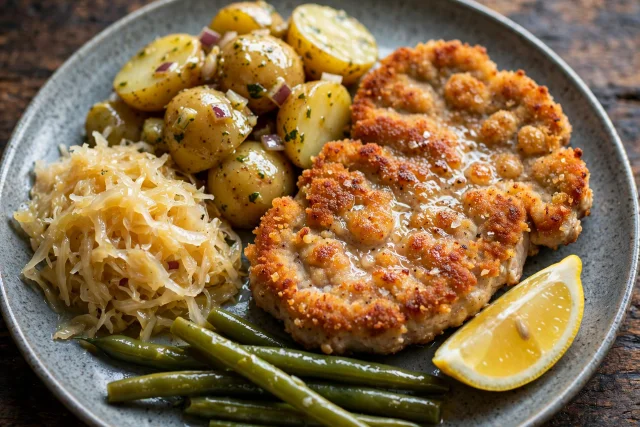
- Pork Schnitzel with Warm Potato Salad and Sauerkraut: Thin pork cutlets breaded and pan fried, with warm potato salad and a pile of sauerkraut alongside. It is a German plate built for a cold evening, and the sharp cabbage cuts the richness of the meat.
Snacks:
- Kefir with Honey and Toasted Sunflower Seeds: A small glass of cold kefir with a teaspoon of honey and a scatter of toasted seeds. It is the easiest cultured snack in the week and a good one to hand a sceptical teenager.

Day 3
Breakfast:
- Idli with Coconut Chutney and Sambar: Steamed rice and lentil cakes with coconut chutney and a thin lentil sambar for dipping. The batter ferments overnight, which is what makes the cakes light, and the whole breakfast feels gentler than bread.
Lunch:
- Masala Dosa with Potato Filling and Tomato Chutney: A thin fermented crepe folded around spiced potato, with tomato chutney on the side. It is crisp at the edges and soft in the middle, and it proves that fermentation is not only about cabbage.
Dinner:
- Chicken Curry with Rice and Cucumber Raita: Chicken simmered in a tomato and onion masala, served with rice and a cool raita of yogurt, cucumber, and mint. The raita is the cultured part, and it settles the heat of the curry nicely.
Snacks:
- Kefir Lassi with Cardamom: Kefir blended with a little water, a pinch of cardamom, and a spoon of sugar if you need it. It is thinner than a yogurt lassi and sharper, and it is a good use for kefir that has turned very tangy.
Day 4
Breakfast:
- Miso Soup with Silken Tofu and Seaweed: A light dashi broth with silken tofu, wakame, and a spoon of white miso stirred in off the heat. It takes five minutes, and it is the warmest possible start on a morning when nothing else appeals.
Lunch:
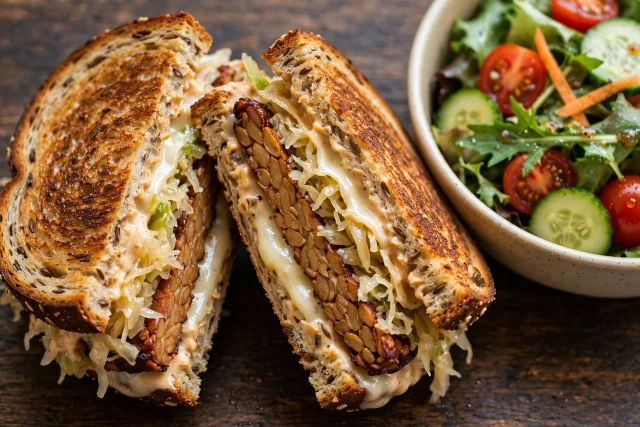
- Tempeh Reuben Sandwich with Quick Slaw: Sliced tempeh pan fried and layered with sauerkraut, cheese, and dressing on toasted rye, with a sharp slaw beside it. It is the sandwich that converts people who think they do not like tempeh.
Dinner:
- Miso Glazed Salmon with Rice and Steamed Greens: Salmon brushed with miso, mirin, and a little honey, grilled until the glaze darkens, with rice and greens. The miso makes the fish taste sweeter and deeper without any sugar-heavy sauce.
Snacks:
- Chilli Salt Edamame Pods: Podded soybeans boiled for four minutes and tossed with flaky salt while still hot. They are a protein snack you eat with your fingers, and they keep the afternoon from turning into a biscuit run.
Day 5
Breakfast:
- Kefir with Cucumber, Mint and Dill: Cold kefir whizzed with cucumber, mint, dill, and a pinch of salt. It drinks like a savoury smoothie, and it is the closest thing in the week to a Turkish ayran with extra cultures.
Lunch:
- Red Lentil Soup with Warm Pide and Lemon: Red lentils cooked down with onion, carrot, and cumin until smooth, served with warm pide and a wedge of lemon. It is cheap, filling, and the bread is the only thing that needs any attention.
Dinner:
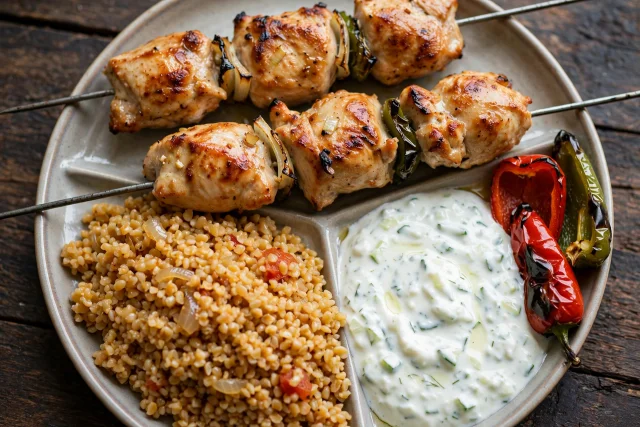
- Chicken Shish with Bulgur Pilaf and Cacik: Yogurt marinated chicken skewers grilled hard, with bulgur pilaf and a bowl of cacik made from yogurt, cucumber, and garlic. The yogurt does the tenderising and the cooling, so one ingredient works twice.
Snacks:
- Dried Apricots with Kefir Yogurt: Soft dried apricots with a spoon of thick kefir yogurt over the top. It tastes like dessert, carries calcium and cultures, and takes the edge off a sweet craving without a trip to the shop.
Day 6
Breakfast:
- Tempeh Scramble Tacos with Salsa Verde: Crumbled tempeh fried with onion, cumin, and paprika, spooned into warm tortillas with salsa verde. It eats like a breakfast taco and gives you a savoury, protein-heavy start without any meat.
Lunch:
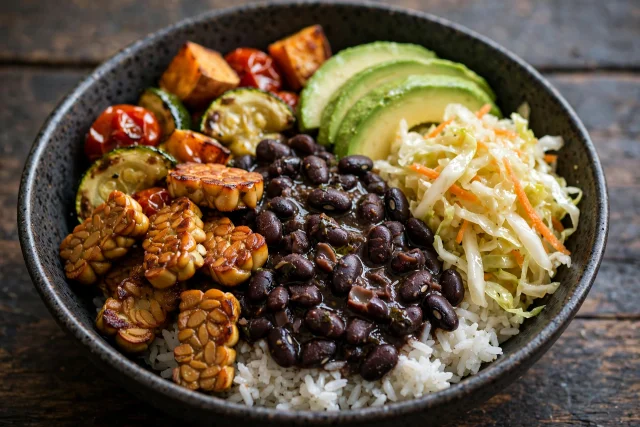
- Black Bean and Tempeh Bowl with Rice and Curtido: Rice and black beans topped with seared tempeh, avocado, and a spoon of curtido, the fermented cabbage slaw of Central America. It is the most filling lunch of the week and it packs well.
Dinner:
- Chicken Tinga with Rice and Pickled Onions: Chicken simmered in a smoky tomato and chipotle sauce, served with rice and quick pickled red onions. The onions are a fast pickle rather than a true ferment, which is fine on a day that already had tempeh.
Snacks:
- Mango Slices with Chilli Salt: Ripe mango sliced and dusted with chilli powder and lime juice. It is a two minute snack that tastes like a market stall, and it costs almost nothing when mangoes are in season.

Day 7
Breakfast:
- Kefir and Mango Smoothie with Lime: Kefir blended with mango, lime juice, and a little ice until thick. It is a cold breakfast for a warm morning, and it hides the tang of kefir behind ripe fruit without added sugar.
Lunch:
- Tempeh Banh Mi with Pickled Carrot and Daikon: A crusty roll filled with marinated tempeh, pickled carrot and daikon, cucumber, coriander, and chilli mayo. It is loud and crunchy, and the pickles cut through the fried tempeh beautifully.
Dinner:
- Beef Pho with Rice Noodles and Herbs: A clear beef broth poured over rice noodles, thin beef slices, herbs, and beansprouts, with lime at the table. The broth takes time, so make it on a day you are home, and the bowls do the rest.
Snacks:
- Rice Cakes with Kimchi and Sesame: Plain rice cakes topped with chopped kimchi and a scatter of sesame seeds. It is the last jar-clearing snack of the week, salty and sour, and it takes about ninety seconds to make.
Fermented Foods List and Grocery Guide for the Week
One shop covers all twenty eight dishes, plus a second small trip for anything live that you want very fresh. Buy the ferments last so they stay cold on the way home.
Fruits
- Fresh and Ripe: Mangoes, lemons, limes, and berries (the smoothie, the chilli mango, the kefir bowl, and the dressings).
- Dried: Soft dried apricots (the kefir yogurt snack).
Vegetables
- Cabbage and Roots: Napa cabbage kimchi, sauerkraut, carrot, daikon, potato, and red onion (the jjigae, the schnitzel plate, the banh mi, and the pickles).
- Greens and Alliums: Cucumber, zucchini, scallions, onion, garlic, spinach or other greens, coriander, mint, and dill (the bowls, the braise, the raita, and the soup).
- Peppers and Pods: Green chilli, bell peppers, and edamame (the tacos, the shish, and the snack).
Proteins
- Meat and Fish: Pork belly, pork cutlets, chicken thighs, chicken breast, beef sirloin, and salmon fillet (the jjigae, the schnitzel, the shish, the tinga, the pho, and the miso glaze).
- Plant Proteins: Tempeh, firm tofu, silken tofu, and black beans (the reuben, the braise, the soup, the scramble, and the bowl).
- Dairy and Cultures: Kefir, plain yogurt, and sliced cheese for the sandwich (the bowls, the lassi, the raita, the cacik, and the reuben).
Whole Grains
- Rice and Noodles: Short grain rice, basmati rice, rice noodles, and rice cakes (the kimchi bowl, the curry, the pho, and the snack).
- Bread and Batter: Rye bread, pide, crusty rolls, corn tortillas, idli batter, and dosa batter (the reuben, the soup, the shish, the banh mi, the tacos, and the South Indian breakfasts).
- Oats and Grains: Rolled oats, bulgur, and red lentils (the kefir bowl, the pilaf, and the soup).
Nuts, Seeds and Fats
- Seeds: Ground flax, sunflower seeds, and sesame seeds (the kefir bowl, the kefir snack, and the rice cakes).
- Oils: Olive oil, sesame oil, and a neutral oil for frying (the braise, the bowls, and the schnitzel).
Dairy, Sauces and Flavorings
- Ferments and Pastes: Kimchi, sauerkraut, white miso, and doenjang (the whole week).
- Sauces: Soy sauce, gochugaru, gochujang, mirin, honey, and chilli mayo (the jjigae, the salmon, the tinga, and the banh mi).
- Spices: Cumin, paprika, caraway, cardamom, turmeric, and flaky salt (the soups, the scramble, and the pilaf).
Simple Swaps for Your Fermented Foods Meal Plan
Not every jar suits every day, and a ferment you dislike is not worth forcing down. These five swaps answer the moments that come up in a first week of cultured food.
- When the Taste Is Too Strong: Stir a spoon of kimchi into rice with a fried egg instead of eating it cold from the jar. The starch softens the sourness and the heat, and you still get the cultures.
- When the Fridge Holds Too Many Jars: Cook them into the soup. Sauerkraut and kimchi both work in a broth, added at the end, and it clears three half-empty jars in one pot.
- When You Are Eating Out: Ask for a side of pickles or a yogurt drink rather than hunting for sauerkraut. A plain yogurt raita or a glass of kefir does the same job as a jar at home.
- When Your Stomach Feels Sensitive: Halve the portion and warm the ferment slightly with the dish instead of eating it cold. Small and warm is gentler than a cold heap on an empty stomach.
- When You Want Something Warm: Trade the kefir breakfast for miso soup and keep the kefir for the afternoon. Warm broth in the morning is easier on a cold day than anything from the fridge.
How to Start Eating Fermented Foods Without Overdoing It
Buy two jars, not seven. A jar of sauerkraut and a bottle of kefir will tell you within a week whether you like the taste, and they cost far less than a shelf of experiments you end up tipping out.
Put the ferment where you already eat it, not in a special meal. A spoon of kraut beside the eggs, kefir instead of milk on the oats, and miso stirred into soup are three habits that survive a busy month far better than a new recipe every night.
Keep exploring with our a plain guide to probiotics for women, weeks that build immunity through food, gentler eating for Crohn's disease, a calm plan for ulcerative colitis, and a whole collection of cabbage ferments, plus a coconut chicken curry that simmers in one pot and a slow cooker beef stew for cold evenings.
This article is for information only and is not medical advice. Read our full disclaimer.