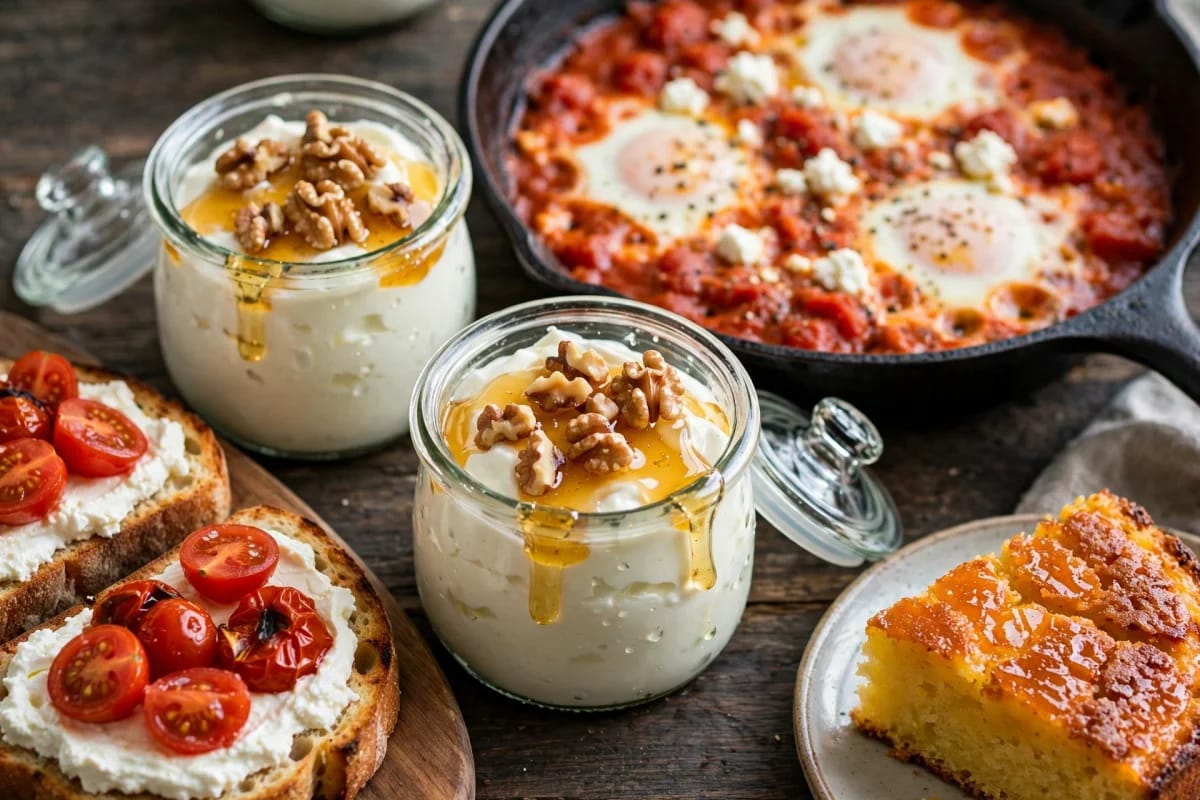
The alarm goes off before the light does, and the kitchen is still cool when you get there. Coffee starts, the fridge door opens, and the same question arrives. What can I make that is quick, filling, and actually worth eating at seven in the morning?
These Mediterranean diet breakfast ideas are built for exactly that moment. They lean on yogurt, eggs, bread, olive oil, tomatoes, olives, and fruit, and most of them come together faster than a delivery order.
The list runs through Greece, Turkey, Lebanon, Israel, Spain, Italy, Morocco, Egypt, and the Balkans, with a few modern bowls that borrow from all of them. Some dishes are no-cook jars, some are skillet eggs, and a few are oven bakes worth making on a Sunday.
The order moves from the fastest options to the slowest, so the first entries suit a weekday and the last ones suit a morning with time in it. Nothing needs a special appliance, and nothing asks for an ingredient you cannot find in a normal supermarket.
Each idea comes with a photo, a short explanation of why the combination works, the method that gets it on the plate, and a serving note. The make-ahead dishes say so directly, because a breakfast you can assemble the night before is the one that survives a busy week.
Pick two no-cook options for the days you are running late, one skillet dish for a slower morning, and one bake for the weekend. Swap them freely, repeat the ones you like, and treat the list as a rotation rather than a rule.
Why These Mediterranean Breakfast Ideas Work So Well
Mediterranean eating is less a strict diet than a pattern, built on vegetables, fruit, whole grains, beans, nuts, olive oil, and modest amounts of dairy and fish. Breakfast is where that pattern gets easy, because the foods are already quick and the flavors need very little work.
- Olive Oil and Nuts Carry the Fat: Olive oil, walnuts, almonds, pistachios, and sesame supply most of the fat in these breakfasts, and the Harvard review of the Mediterranean diet links that pattern to heart health. A spoon of oil and a small handful of nuts is enough for one plate.
- Protein Arrives Early: Greek yogurt, eggs, feta, halloumi, labneh, tuna, and beans all put protein on the plate before the day starts. That is the part that keeps a breakfast from turning into a mid-morning snack.
- Fiber Comes From Whole Foods: Chickpeas, fava beans, oats, quinoa, barley rusks, fruit, and vegetables carry fiber without a supplement. The fiber sits inside the food, which is why these plates feel filling rather than heavy.
- Bread Is a Base, Not the Meal: Toasted bread carries feta, tomato, avocado, or olive oil, and it is rarely the largest thing on the plate. A thick slice under a generous topping is the pattern behind pan con tomate, labneh pita, and every toast here.
- Vegetables Belong at Breakfast: Tomatoes, cucumbers, peppers, spinach, and eggplant appear in omelets, salads, shakshuka, and sandwiches. Nobody invented a special breakfast vegetable for this list, because the ordinary ones already work.
- The List Fits Real Mornings: Seven of these dishes need no heat at all, eleven travel well in a sealed container, and a dozen can be assembled the night before. That range is the point, since a breakfast plan only survives if it matches the morning you actually have.
25 Mediterranean Diet Breakfast Ideas for Busy Mornings
The twenty-five dishes below start with the ones you can assemble in five minutes and move toward the ones that need a pan or an oven. Every entry names its cuisine, its main ingredients, and the moment it suits best, so you can match a dish to the morning in front of you.
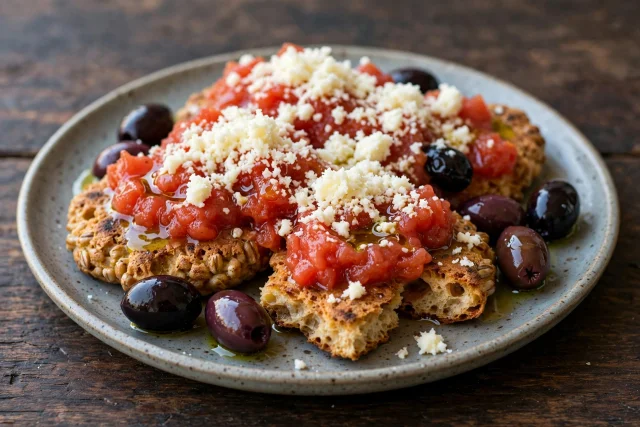
1. Cretan Breakfast Plate with Rusks and Olives
On Crete, breakfast can be as simple as barley rusks, tomato, olive oil, and a handful of olives. The rusk is hard enough to need the tomato, and the juice soaks in and softens it. It is the least cooked dish here and one of the most satisfying.
Wet a barley rusk under the tap for a second, then grate a ripe tomato over it and drizzle with olive oil. Add salt, a few black olives, and a slice of mizithra or feta. Let it sit for two minutes so the bread absorbs the tomato. Use a coarse grater and let the tomato fall onto the bread.
Serve it with a boiled egg and a small bowl of yogurt if you want more protein. The plate is meant to be assembled at the table, so put the components out and let people build their own. Rusks keep for months in the cupboard. A few capers or a pinch of oregano are good additions.
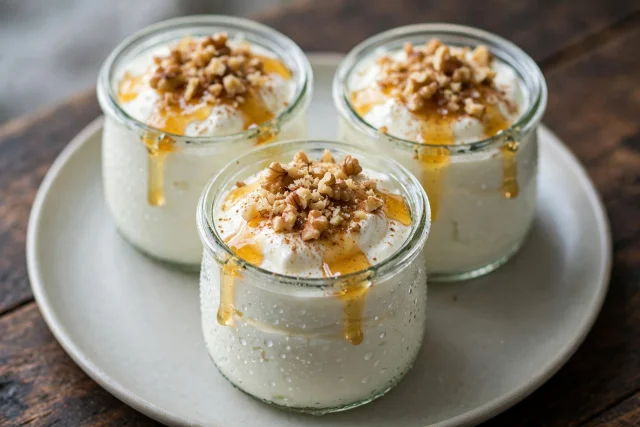
2. Greek Yogurt, Honey, and Walnut Pots
Greek yogurt with honey and walnuts is the simplest breakfast on the list and the one most Greek households actually eat. Thick yogurt gives it body, honey brings sweetness, and walnuts add a dry crunch that keeps every spoonful from tasting the same.
Spoon full-fat Greek yogurt into small jars, leaving room at the top. Drizzle honey over each one, scatter crushed walnuts and a little cinnamon, and chill for an hour so the honey sinks in. Keep the nuts separate if you want them crisp. A wide jar makes the layering easier and leaves room to stir before you eat.
Serve the jars straight from the fridge with a spoon and a coffee, or pack one in a bag for the commute. Add diced peach or a few raspberries when they are in season. The pots hold for three days, which makes them a sensible Sunday job. A spoon of toasted sesame seeds on top is a good finish.
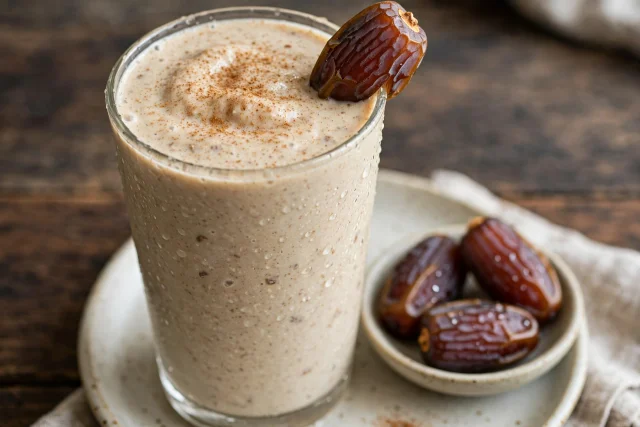
3. Date and Tahini Smoothie
Dates and tahini are a classic Levantine pairing, sweet and nutty in a way that makes a smoothie taste like something you chose rather than something you blended. Tahini adds sesame depth and a little fat, and the dates do the sweetening. A blender makes quick work of it, and a stick blender does too.
Soak two medjool dates in hot water for five minutes, then drain them. Blend the dates with a frozen banana, two spoons of tahini, a cup of milk, a pinch of cinnamon, and a handful of ice until smooth. Taste and add a little more date if it needs it.
Pour it into a tall glass and dust the top with cinnamon. It travels in a sealed bottle and holds in the fridge for a day, so it suits a morning when you have no time to sit down. Add a spoon of oats for a thicker drink. Rinse the blender jar right away, before the tahini sets.
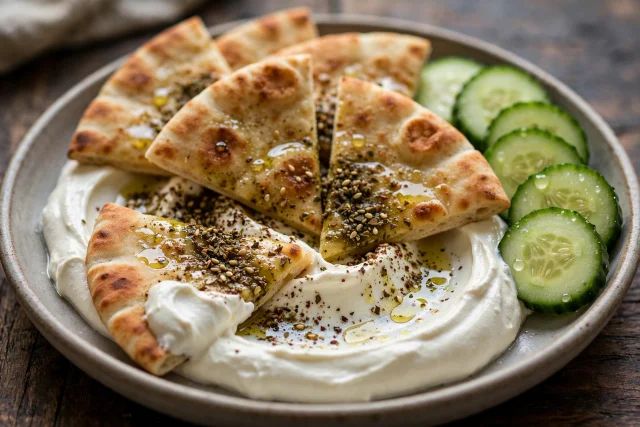
4. Labneh, Za’atar, and Cucumber Pita
Labneh is strained yogurt, thick enough to spread and tangy enough to wake up a morning. Za’atar brings sesame, thyme, and sumac, and cucumber keeps the whole thing cool. This is a Lebanese breakfast that needs no cooking at all. It is also the base for several other dishes on this list.
Spoon labneh into a shallow bowl and make a well in the middle. Pour olive oil into the well, dust the surface with za’atar, and add a pinch of salt. Warm the pita for a minute in a dry pan, then cut it into triangles for scooping. A fork works just as well if you do not have a shallow bowl.
Set the bowl on the table with cucumber slices, black olives, and a few mint leaves, and let everyone help themselves. It travels well in a lunch box if you keep the pita separate. Labneh also works on toast when there is no pita. A pinch of sumac adds a sharper, more citrusy edge.
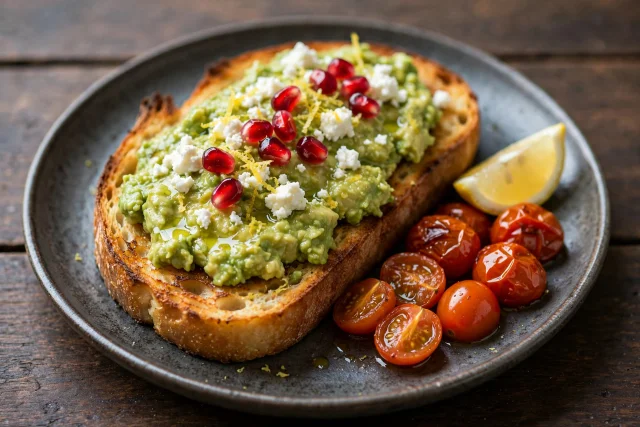
5. Avocado, Feta, and Pomegranate Toast
Avocado toast gets a Mediterranean accent from feta and pomegranate. The avocado brings fat and softness, the feta brings salt, and the pomegranate seeds pop against both. It takes five minutes and looks better than the effort suggests. Use an avocado that gives slightly when you press it.
Toast a thick slice of whole grain bread. Mash half an avocado with lemon juice and a pinch of salt, spread it on the toast, and crumble feta over the top. Scatter pomegranate seeds and a little lemon zest, then finish with olive oil and pepper.
Eat it while the toast is still warm, with a fork and a napkin. Add a soft-boiled egg if you want it to last until lunch. Pomegranate seeds freeze well, so keep a bag ready for mornings when you have none fresh. A pinch of flaky salt on top makes the fruit taste brighter.
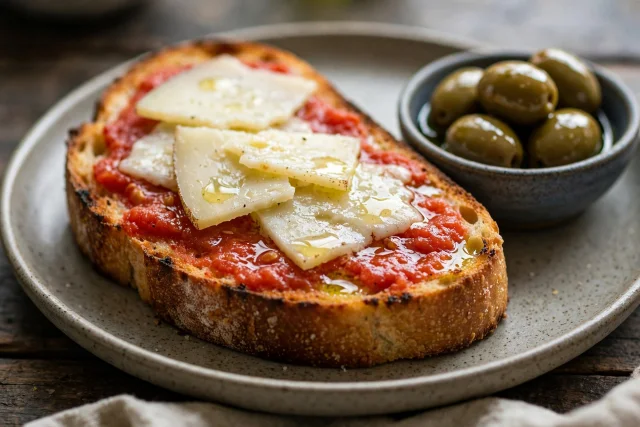
6. Pan con Tomate with Manchego
Pan con tomate is a Catalan standard, and it works at breakfast because it is mostly bread, tomato, and olive oil. Manchego turns it into a fuller plate, and the whole thing takes less time than waiting for a toaster to pop. Use a tomato you would eat on its own, because there is nowhere to hide.
Toast thick country bread until it is crisp. Rub a cut garlic clove over the warm surface, then rub a ripe tomato hard so the pulp soaks into the bread. Drizzle generously with olive oil, add salt, and lay thin slices of Manchego on top. Work quickly, while the bread is still hot enough to take the tomato.
Serve it open-faced with a coffee, or add a slice of serrano ham if you eat meat. The quality depends on the tomato, so use the ripest one you can find. A little grated tomato on the side lets people add more. A little salt on the tomato beforehand draws out the juice.
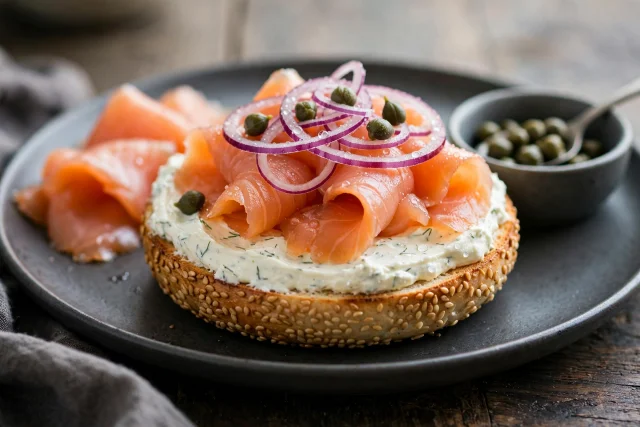
7. Smoked Salmon and Dill Cream Cheese Bagel
A bagel with smoked salmon is not traditional Mediterranean food, but the dill, lemon, and olive oil push it in that direction. It is also the fastest high-protein breakfast on the list, and it needs no cooking beyond toasting the bagel. A dense bagel holds everything without falling apart.
Mix cream cheese with chopped dill, lemon zest, and cracked black pepper. Toast the bagel until the outside is crisp, then spread the cream cheese on both halves. Layer on smoked salmon, a few capers, and very thin slices of red onion. Let the cheese sit out for ten minutes so it spreads cleanly.
Close it, cut it in half, and eat it with your hands. It packs well if you wrap it tightly and keep it cool until lunch. Use labneh instead of cream cheese when you want a tangier, lighter version. A few cornichons on the side cut through the richness.
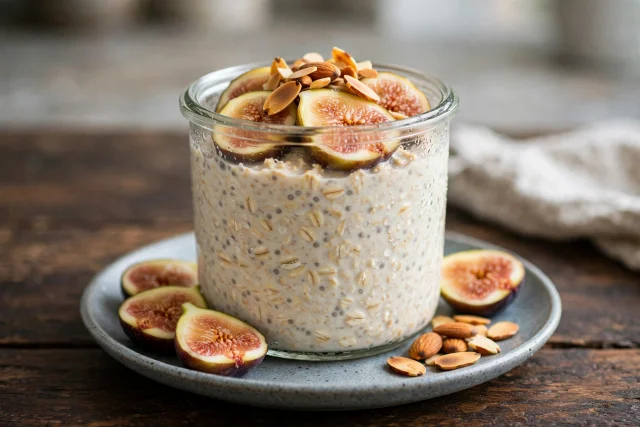
8. Overnight Oats with Fig and Almond
Overnight oats are the easiest make-ahead breakfast in this list, and figs make them feel less like a routine. The oats soften in the fridge while you sleep, and the almonds stay crunchy if you add them in the morning. They take five minutes to put together and no cooking.
Mix half a cup of rolled oats with half a cup of milk, a spoon of yogurt, a spoon of chia seeds, and a little salt. Cover and chill overnight. In the morning, stir, then top with sliced figs, toasted almonds, and a drizzle of honey. Use a jar with a lid so you can shake it before chilling.
Eat it cold from the jar, or warm it in a pan for two minutes if you prefer. It keeps for three days, so make three jars at once. Swap the milk for almond milk and the yogurt for coconut yogurt if you need it dairy free. A spoon of almond butter stirred in makes it creamier.
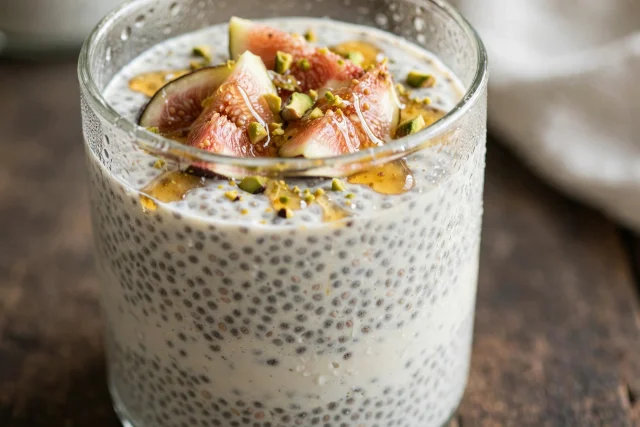
9. Fig and Pistachio Chia Pudding
Chia pudding is a make-ahead breakfast that behaves like a dessert. The seeds swell overnight into a creamy base, and figs and pistachios give it enough texture to feel like a real dish rather than a health chore. It is modern Mediterranean cooking at its easiest.
Whisk chia seeds into almond milk with a spoon of honey and a splash of vanilla, then wait ten minutes and whisk again to break up the clumps. Cover and chill overnight. In the morning, spoon it into a glass and layer with sliced figs and chopped pistachios.
Serve it cold with an extra drizzle of honey and a pinch of salt, which makes the figs taste sweeter. It keeps for three days, so make four jars at once. Swap the figs for berries when figs are out of season. A spoon of toasted coconut adds another layer of texture.
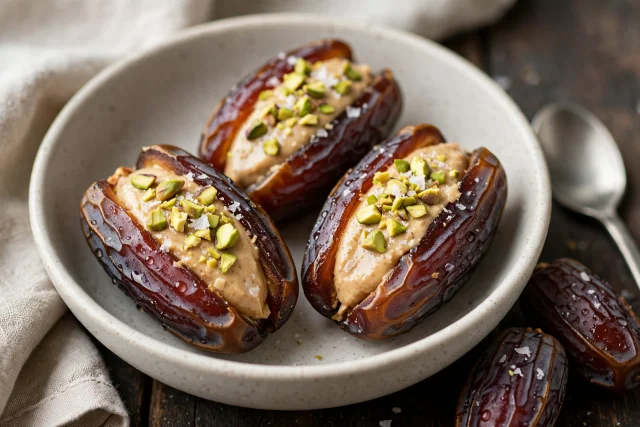
10. Stuffed Medjool Dates with Almond Butter and Pistachio
Stuffed dates are the no-cook answer to a sweet craving at eight in the morning. Medjool dates are soft and caramel-like, almond butter adds fat and salt, and pistachios give a green crunch. They take ten minutes and keep for a week. They need no oven and no bowl, which is most of the appeal.
Slice each date along one side and pull out the pit. Spoon a little almond butter into the opening, press it closed, and roll the date in chopped pistachios. Add a flake of sea salt on top and chill them for twenty minutes so they set. Use a small spoon so the filling does not spill over the sides.
Pack three or four in a small container with a few almonds and call it breakfast on the run. They also work as a snack before a workout or a dessert after dinner. Use peanut butter or tahini if almond butter is not in the cupboard. Kept cold, they stay firm for a week.
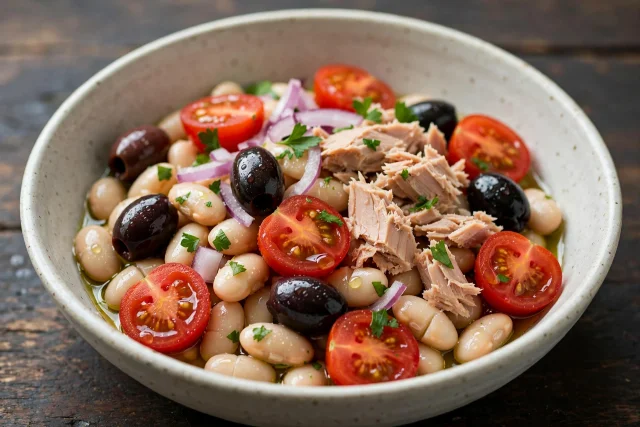
11. Tuna, White Bean, and Olive Breakfast Salad
A savory breakfast salad is normal in Italy and Greece, and it makes more sense than it sounds. White beans give it substance, tuna adds protein, and olives and tomatoes bring the salt and acid that morning food often lacks. It also holds up in a lunch box.
Drain a can of cannellini beans and a can of tuna, then tip both into a bowl. Add halved cherry tomatoes, sliced red onion, black olives, and chopped parsley. Dress with olive oil, lemon juice, salt, and pepper, and fold everything gently. Let it sit for ten minutes so the beans absorb the dressing.
Serve it at room temperature with a slice of bread, or spoon it onto rusks for crunch. It keeps for two days in the fridge and improves after an hour, which makes it a good Sunday prep. Add capers if you want a sharper edge. A few torn mint leaves make it taste fresher.
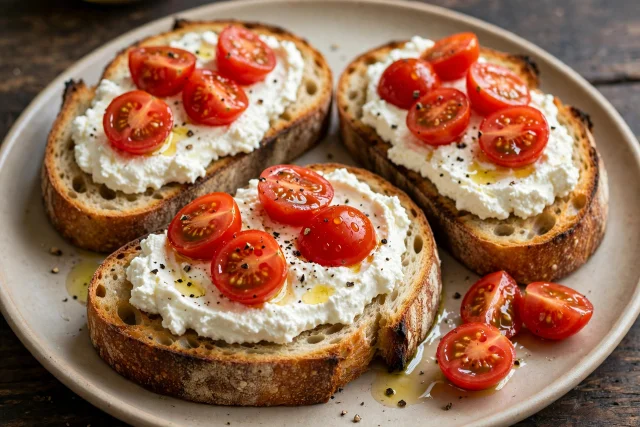
12. Whipped Feta and Tomato Toast
Whipped feta turns a plain slice of toast into something that tastes considered. The cheese loosens with yogurt and olive oil until it spreads like thick cream, then meets warm tomatoes and black pepper. It is Greek in spirit and takes about ten minutes.
Crumble feta into a food processor with a spoon of Greek yogurt, a squeeze of lemon, and enough olive oil to bring it together. Blend until smooth, then taste. Toast thick sourdough, spread the feta thickly, and pile on halved cherry tomatoes with salt and pepper.
Finish with oregano and a little more oil, and serve it while the bread is still warm. Add a fried egg if you want more protein, or keep it as it is for a lighter morning. The whipped feta keeps for four days in the fridge. Warm the spread for ten seconds if it has been chilled overnight.
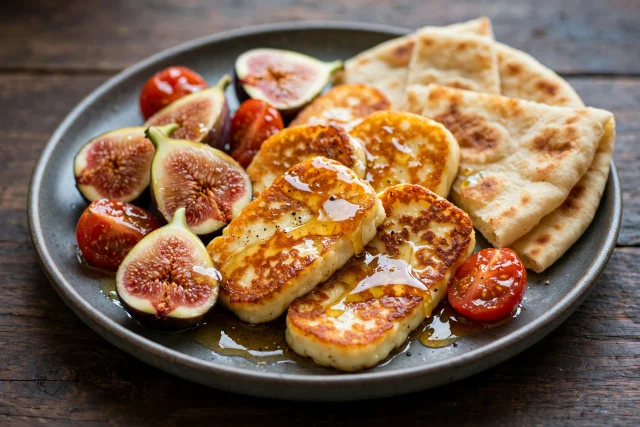
13. Halloumi and Honey Breakfast Plate
Halloumi is a Cypriot cheese that holds its shape in a hot pan and turns golden at the edges. Honey softens the salt, figs add sweetness, and warm bread makes it a plate rather than a snack. It is the closest thing here to a cooked breakfast.
Slice the halloumi thick and pat it dry. Sear it in a dry non-stick pan over medium heat for two minutes a side, until the surface is deeply golden. Warm the flatbread in the same pan, then drizzle the cheese with honey and scatter a few figs and tomatoes.
Serve it immediately, while the cheese still squeaks against your teeth. Add a handful of rocket and a squeeze of lemon to cut the richness. Halloumi is salty, so go easy on any extra salt at the table. A small bowl of yogurt alongside balances the salt further.
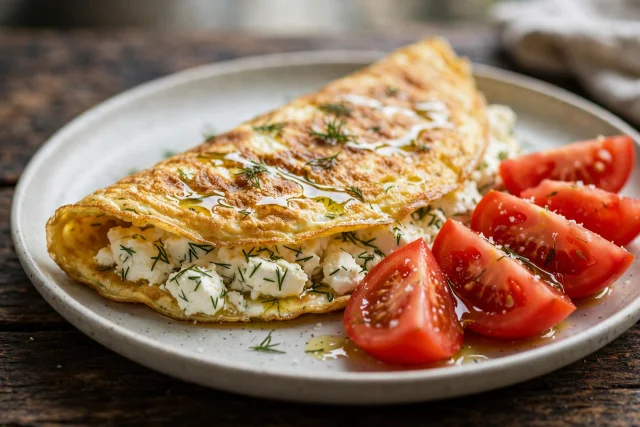
14. Feta and Dill Omelet with Tomatoes
A feta and dill omelet is a Greek home breakfast, and it is a good argument for keeping eggs in the fridge. The dill cuts through the salt of the cheese, and the tomatoes on the side add the fresh note that an omelet usually needs. It takes about ten minutes and uses one pan.
Beat three eggs with a pinch of salt and a spoon of water. Warm butter in a non-stick pan over medium-low heat, pour in the eggs, and stir gently until they start to set. Scatter crumbled feta and chopped dill over one half, then fold and slide it out.
Serve it with sliced tomatoes, a drizzle of olive oil, and bread for mopping. Add a few olives on the side if you want it more substantial. Keep the heat low, because a slow omelet stays soft while a hot pan makes it rubbery. A slice of sourdough on the side makes it a full plate.
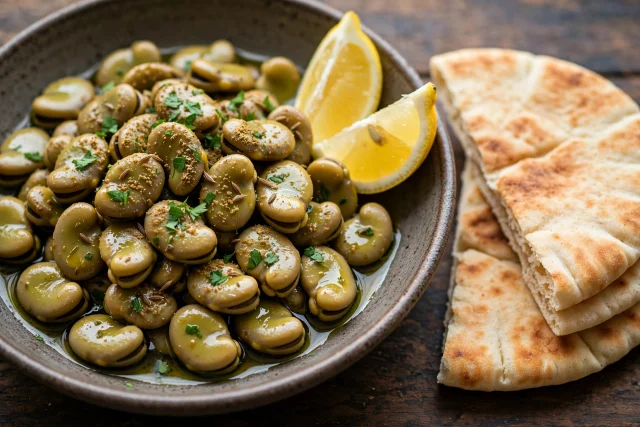
15. Foul Medames with Cumin and Pita
Foul medames is Egyptian fava beans, simmered until soft and dressed with cumin, lemon, and olive oil. It is one of the oldest breakfasts in the region and one of the cheapest, and it tastes far better than the price suggests. It is eaten across the Middle East and North Africa.
Warm canned fava beans in a small pan with a little water, then mash them roughly with a fork. Add crushed garlic, ground cumin, lemon juice, and a good glug of olive oil. Taste and adjust the salt, then loosen with more water if it looks stiff.
Spoon it into a bowl and top with chopped parsley, diced tomato, and a little more oil. Serve with warm pita for scooping, and add a hard-boiled egg if you want more protein. It reheats well and keeps for three days. A squeeze of lemon at the table keeps it bright.
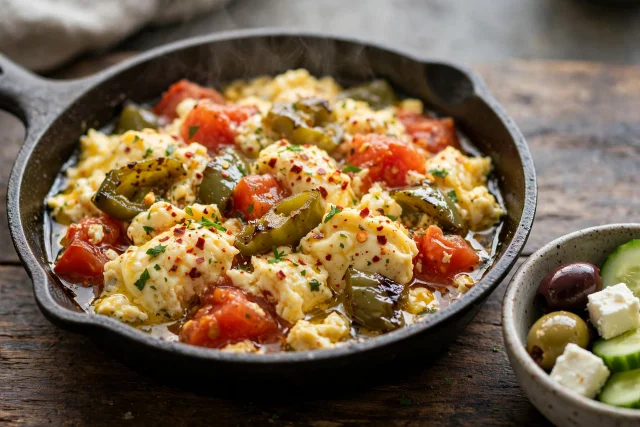
16. Turkish Scrambled Eggs with Peppers
Menemen is the Turkish breakfast of soft eggs cooked in tomatoes and peppers, and it is worth learning by name. It is looser than shakshuka, with the eggs stirred rather than poached, and it comes together in one pan in about fifteen minutes.
Cook sliced peppers in olive oil until they soften, then add grated tomatoes and a little salt. Let the tomatoes reduce for five minutes, until the mixture is thick. Lower the heat, pour in beaten eggs, and stir slowly until they are just set.
Take the pan off the heat while the eggs still look a little wet, and scatter parsley and red pepper flakes over the top. Serve it with warm bread and a spoon of yogurt on the side. Feta crumbled in at the end is a good addition. The yogurt cools the pepper flakes for anyone who needs it.
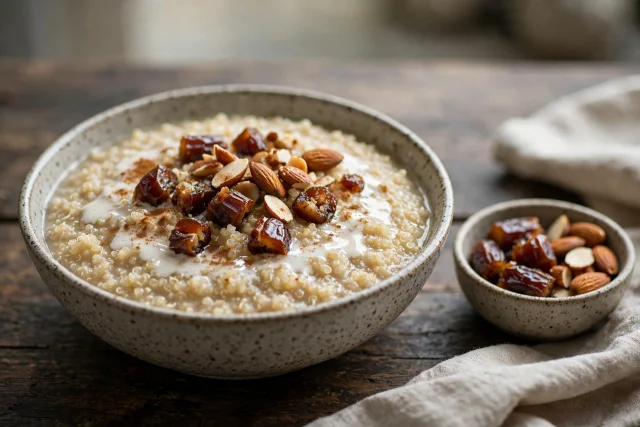
17. Quinoa Breakfast Bowl with Dates and Almonds
Quinoa for breakfast works when you treat it like porridge rather than salad. Cooked in milk with cinnamon, it turns soft and nutty, and dates and almonds make it sweet enough without added sugar. It is a modern bowl with old Mediterranean ingredients.
Rinse a cup of quinoa, then simmer it in two cups of milk with a cinnamon stick for fifteen minutes, until the grains open and the liquid thickens. Stir in chopped dates and a little salt. Remove the cinnamon and loosen with a little more milk.
Spoon it into bowls and top with toasted almonds, a drizzle of honey, and a few slices of banana. It keeps for three days and reheats with a splash of milk. Make it with water instead of milk if you want it dairy free. A spoon of tahini on top makes it richer.
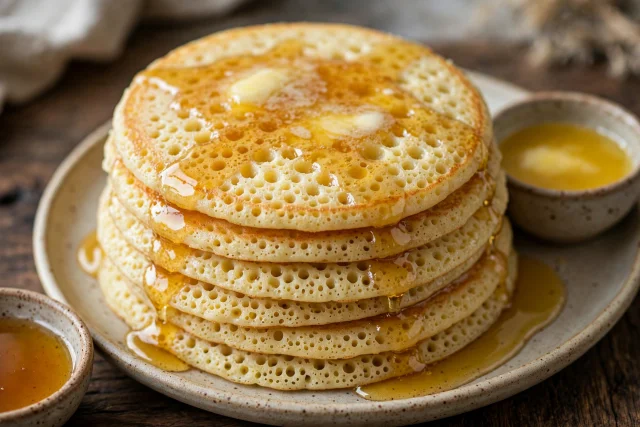
18. Baghrir Semolina Pancakes with Honey
Baghrir are Moroccan pancakes covered in tiny holes, made from semolina and flour and cooked only on one side. The holes hold honey and butter, which is the whole point. They are softer and lighter than an American pancake. The batter is thin, so the holes form as the surface sets.
Whisk semolina, flour, yeast, baking powder, and salt with warm water into a thin batter. Leave it for thirty minutes, until bubbles form. Pour small rounds into a hot non-stick pan and cook only until the surface is covered in holes and set.
Stack them on a plate and drizzle with warm honey and melted butter. Serve them with mint tea, which is how they are eaten in Morocco. The batter keeps overnight in the fridge, so you can cook them fresh in the morning. A little orange blossom water in the batter is a nice touch.
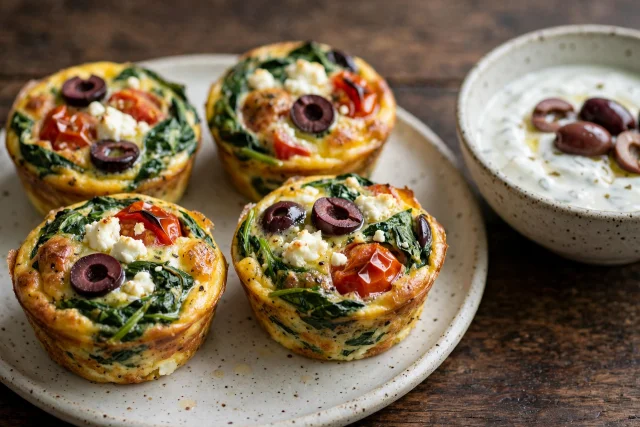
19. Mediterranean Veggie Frittata Cups
Frittata cups are the make-ahead answer to a hot breakfast. They bake in a muffin tin, hold their shape in the fridge, and reheat in a minute. Spinach, tomato, feta, and olives give them enough flavor that nobody notices they are mostly eggs.
Heat the oven to 375 F. Wilt a bag of spinach, squeeze out the water, and chop it. Whisk eight eggs with salt, pepper, and a splash of milk, then stir in the spinach, diced tomato, crumbled feta, and chopped olives. Pour into a greased muffin tin.
Bake for twenty minutes, until the centers are set and the tops are lightly browned. Cool them for five minutes before lifting them out. They keep for four days in the fridge and freeze well, so make a double batch. Reheat two in the microwave for forty seconds, covered.
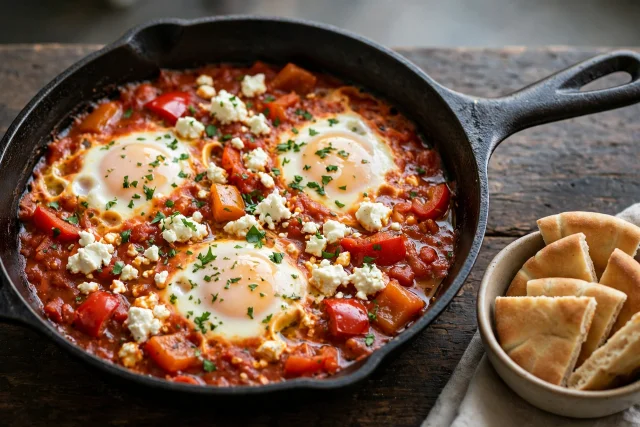
20. Shakshuka with Feta and Parsley
Shakshuka is eggs poached in a spiced tomato and pepper sauce, and it is the most searched breakfast in this collection for good reason. It looks generous, feeds two from one pan, and the sauce can be made a day ahead. It is North African in origin and adopted across the region.
Cook sliced peppers and onion in olive oil until soft, then add garlic, cumin, and smoked paprika. Tip in a can of tomatoes, season, and simmer for fifteen minutes until thick. Make wells in the sauce, crack in four eggs, cover, and cook until the whites set.
Crumble feta over the top and scatter parsley, then bring the pan to the table with bread. Scoop it onto plates and let people take a yolk each. The sauce freezes well, so make a double batch without the eggs. A small bowl of yogurt on the side cools the spice.
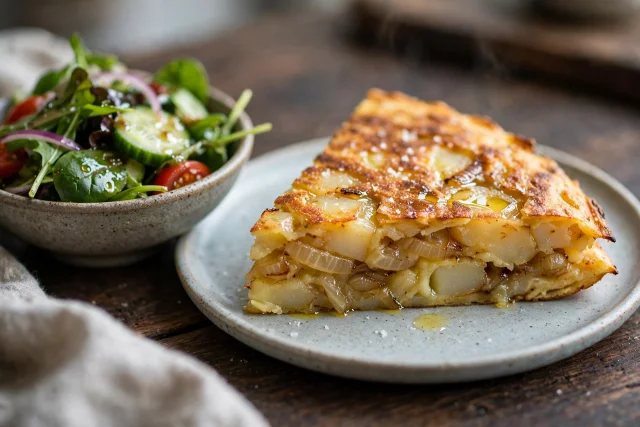
21. Tortilla Española with Sweet Onion
A Spanish tortilla is a thick omelet of potatoes and onions, cooked slowly in olive oil. It is served at room temperature, which makes it a practical breakfast and a good thing to keep in the fridge for the week. It is good cold too, which is why it suits the morning table.
Slice potatoes and onions thinly and cook them gently in plenty of olive oil for twenty minutes, until soft but not browned. Drain them, reserving the oil. Beat six eggs, fold in the vegetables, and cook the mixture in a small pan until nearly set.
Flip the tortilla with a plate and slide it back in to finish for two minutes. Let it rest for ten before cutting, so it holds together. Serve it in wedges with a green salad or a slice of tomato. A little salt on top before serving lifts the potato.
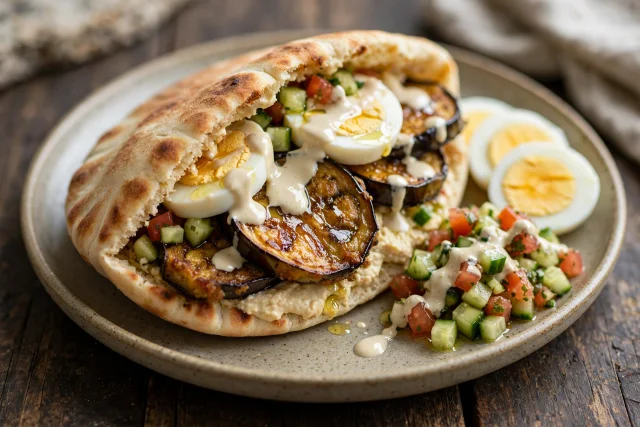
22. Sabich Pita with Eggplant and Egg
Sabich is an Israeli sandwich built from fried eggplant, hard-boiled egg, hummus, salad, and tahini. It sounds like too much for breakfast until you eat one, and then it makes perfect sense. The eggplant can be roasted instead of fried. It is street food in Tel Aviv and a home breakfast elsewhere.
Slice an eggplant, salt it, and roast it at 425 F for twenty-five minutes with olive oil. Boil the eggs for eight minutes and slice them. Warm the pita, spread it with hummus, and layer in the eggplant, egg, chopped cucumber and tomato, and a spoon of tahini sauce.
Roll it up and eat it with both hands, or serve the parts on a plate and let people build their own. Add pickled cucumber for acid and a little chopped parsley. The eggplant and eggs keep for three days, so assemble fresh each morning. A spoon of tahini sauce on top is not optional.
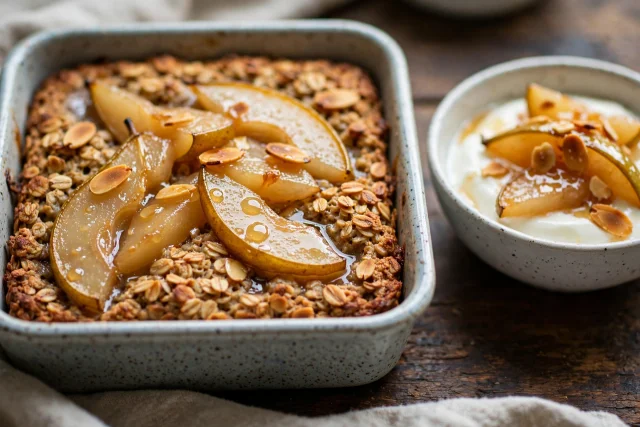
23. Pear and Almond Baked Oatmeal
Baked oatmeal is the weekend version of porridge, and pear and almond make it feel like a proper dish. It bakes into a soft, sliceable breakfast that reheats well, which makes it a sensible thing to make on Sunday. It also slices neatly, so it travels in a lunch box.
Heat the oven to 375 F. Mix two cups of oats with milk, an egg, maple syrup, cinnamon, and a little salt, then fold in diced pear and half the almonds. Pour it into a buttered dish and scatter the rest of the almonds over the top. Let the mixture sit for five minutes before it goes in the oven.
Bake for thirty-five minutes, until the center is set and the top is golden. Let it cool for ten minutes before slicing. Serve it warm with yogurt, and keep the leftovers covered in the fridge for four days. A drizzle of maple syrup at the table is a good finish.
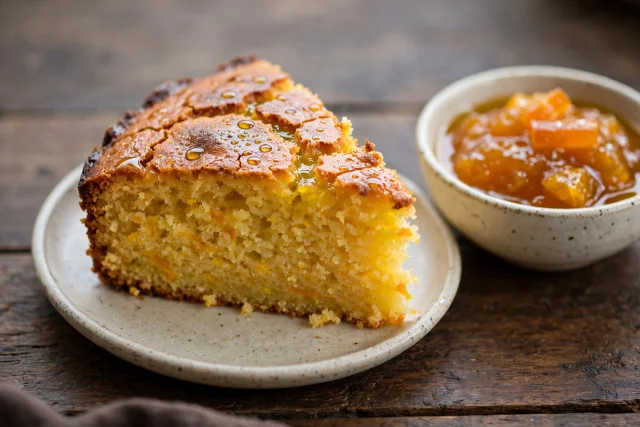
24. Orange and Olive Oil Breakfast Cake
An orange olive oil cake is a Greek bakery habit that makes sense at breakfast. It is moist, barely sweet, and sturdy enough to eat with coffee or wrap for later. Olive oil keeps it soft for days, which is why it belongs in this list. It is also the least fussy baking project in this collection.
Whisk flour, baking powder, and salt. Beat eggs with sugar until pale, then stream in olive oil and add orange zest, orange juice, and a spoon of yogurt. Fold in the dry ingredients, pour into a lined tin, and bake at 350 F for forty minutes.
Cool it in the tin for fifteen minutes, then turn it out. Serve slices with coffee or a little yogurt, and dust with a little icing sugar if you like. It keeps for four days in a tin and freezes well. Wrap a slice in parchment for a commute breakfast.
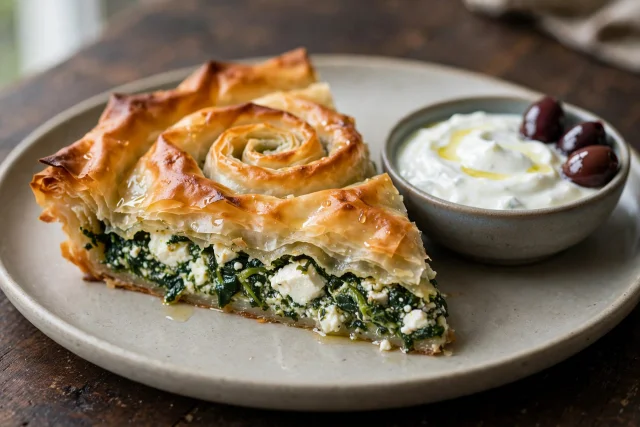
25. Burek-Style Spinach Pie
Burek is a Balkan pastry, and the spinach and cheese version is the one that turns up at breakfast tables from Sarajevo to Istanbul. Phyllo keeps it light, and the filling is mostly greens, which makes it feel less heavy than a pie. It is made for sharing and keeps well for days.
Wilt a large bag of spinach, squeeze it dry, and mix it with crumbled feta, an egg, and a little olive oil. Brush sheets of phyllo with oil, layer them in a baking dish or coil them into a spiral, and spread the filling between the layers. Work on a clean surface and keep the spare sheets covered.
Bake at 375 F for forty minutes, until the pastry is crisp and golden. Cool it for fifteen minutes before cutting, or the layers will shatter. It keeps for three days and reheats well in a low oven. A dollop of thick yogurt on the side balances the pastry.
Making Your Busy Mornings Easier
A make-ahead Mediterranean breakfast is the one that survives a busy week, and most of these dishes can be partly prepped. Cook a tray of frittata cups, bake the oatmeal, and fill four jars with overnight oats or chia pudding. Wash and chop tomatoes and cucumbers, and keep olives and feta on hand.
If you want the rest of the day mapped as well, our 7 day Mediterranean diet meal plan follows the same pattern for lunch and dinner. The NIDDK guidance on diet and nutrition puts variety and portion size ahead of rigid rules, which is a useful frame for breakfast too.
Keep two no-cook options in your regular rotation, one skillet dish for a slower morning, and one bake for the weekend. The rest live in our meal plans hub, alongside the full week plans and seasonal collections. Rotate what you like and drop what you do not.
Keep exploring with our egg-free vegetarian breakfasts, Daniel Fast recipes for every meal, chef-prepared Mediterranean meals delivered, and a full week of oatmeal breakfasts, plus two more worth a save, a whole archive of breakfast ideas and make-ahead egg muffins.
This article is for information only and is not medical advice. Read our full disclaimer.