A calorie deficit diet is a way of eating that keeps your daily intake below the energy your body actually uses, so the shortfall comes out of stored energy over the following weeks. It is a principle rather than a menu, which is why it can be built from almost any cuisine you already like.
A 7 day calorie deficit meal plan for sustainable weight loss is a week of breakfasts, lunches, dinners, and one snack put together to land in a modest deficit without leaving you hunting the cupboard at nine in the evening. The gap is deliberate and it is written down, so nothing about the week is a guess.
The plan leans on chicken, fish, eggs, beans, lentils, yogurt, whole grains, and a lot of vegetables, with olive oil and nuts measured rather than poured. Most adults land between 1,600 and 1,900 calories a day here, roughly 400 to 500 below maintenance, and protein at every meal is the rule that shapes each plate.
It suits anyone who wants to lose weight slowly enough to keep it off, especially people who have cut hard before and bounced straight back. If you are pregnant, breastfeeding, under 18, or managing diabetes or a thyroid condition, take these numbers to your doctor before you start cooking.
The appeal is that nothing is forbidden and nothing is rushed. A modest gap protects muscle and keeps energy steady through the afternoon, and the fibre in beans, vegetables, and whole grains keeps hunger from arriving early. The federal guidance on weight management makes the same point about pace.
Run the week in whatever order suits you. Repeat the dinners you enjoyed, move a lunch to a night when cooking is not going to happen, and treat the snack as movable rather than fixed, because a deficit you can bend is a deficit you can keep.
Key Principles of a Calorie Deficit Diet
A calorie deficit diet is less about eating less of everything and more about choosing where the reduction lands. These are the rules that decide the size of the gap, what fills the plate, and how to keep the whole thing going past the first enthusiastic fortnight.
1. Find Your Maintenance First
A deficit only means something once you know what maintenance looks like for you, since a number that strips weight off one person can stall another. Estimate it from your weight, height, age, and activity, then set the week about 400 calories underneath it and watch what happens.
2. Keep Protein High
Aim for around 30 grams at each meal, which puts most people near 1.2 to 1.6 grams per kilo of body weight across the day. Protein is what protects muscle while you are eating less, and the evidence on protein needs is clear that spreading it across meals works better than one large serving at night.
3. Eat Fibre at Every Meal
Vegetables, beans, lentils, and whole grains add bulk that fills the stomach for very little energy. A plate with fibre on it keeps you comfortable for three or four hours, while the same calories from white bread and juice disappear in one.
4. Keep the Gap Small Enough to Live With
Four hundred to five hundred calories below maintenance is a pace most people can hold for months, and it is the pace that keeps muscle, mood, and sleep intact. A thousand calorie gap loses weight faster and then loses the person doing it, usually somewhere in week three.
5. Measure the Fats and the Extras
Olive oil, nut butter, cheese, and dressings are healthy foods that carry a lot of energy in a small spoon. Pour them by eye and a 400 calorie gap can vanish before dinner, so measure them for the first few weeks until your eye learns the size.
6. Plan for the Days That Go Off Script
Birthdays, work lunches, and holidays are part of a normal month, not a failure of the calorie deficit meal plan. Decide in advance which meals you will enjoy without counting, keep the other meals simple, and go back to the deficit the next morning instead of the next Monday.
A word of medical caution before you begin. A calorie deficit is not appropriate during pregnancy or breastfeeding, and it needs supervision if you take insulin or other diabetes medication, since doses often need adjusting as weight changes. Bring the numbers to your doctor rather than working them out alone.
Your 7 Day Calorie Deficit Meal Plan for Sustainable Weight Loss Overview
This 7 day calorie deficit meal plan for sustainable weight loss features easy recipes and the diet's named foods leaning on chicken, fish, eggs, beans, and vegetables, carrying the protein and fibre that keep a smaller plate satisfying, and it is perfect for beginners and busy people who want a deficit they can keep.
Day 1
Breakfast:
- Menemen with Feta and Whole Wheat Toast: Eggs softly scrambled with tomato, green pepper, and a little feta, served with whole wheat toast for scooping. It is a savoury start carrying about 24 grams of protein, and it stops a mid morning meeting from turning into a biscuit hunt.
Lunch:
- Chicken Shawarma Plate with Garlic Yogurt and Pickled Turnip: Chicken thighs rubbed with shawarma spice and roasted, sliced over cucumber, tomato, and pickled turnip with garlic yogurt. It eats like takeaway and carries close to 40 grams of protein for under 500 calories.
Dinner:
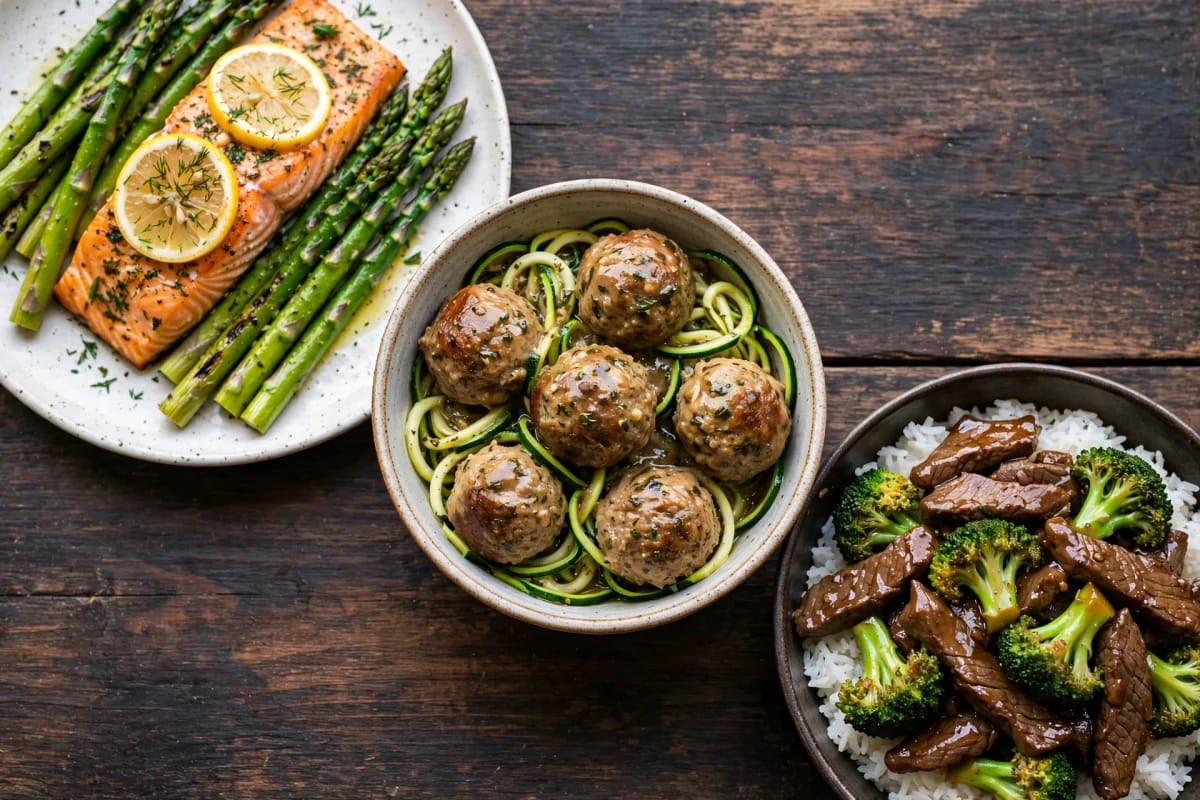
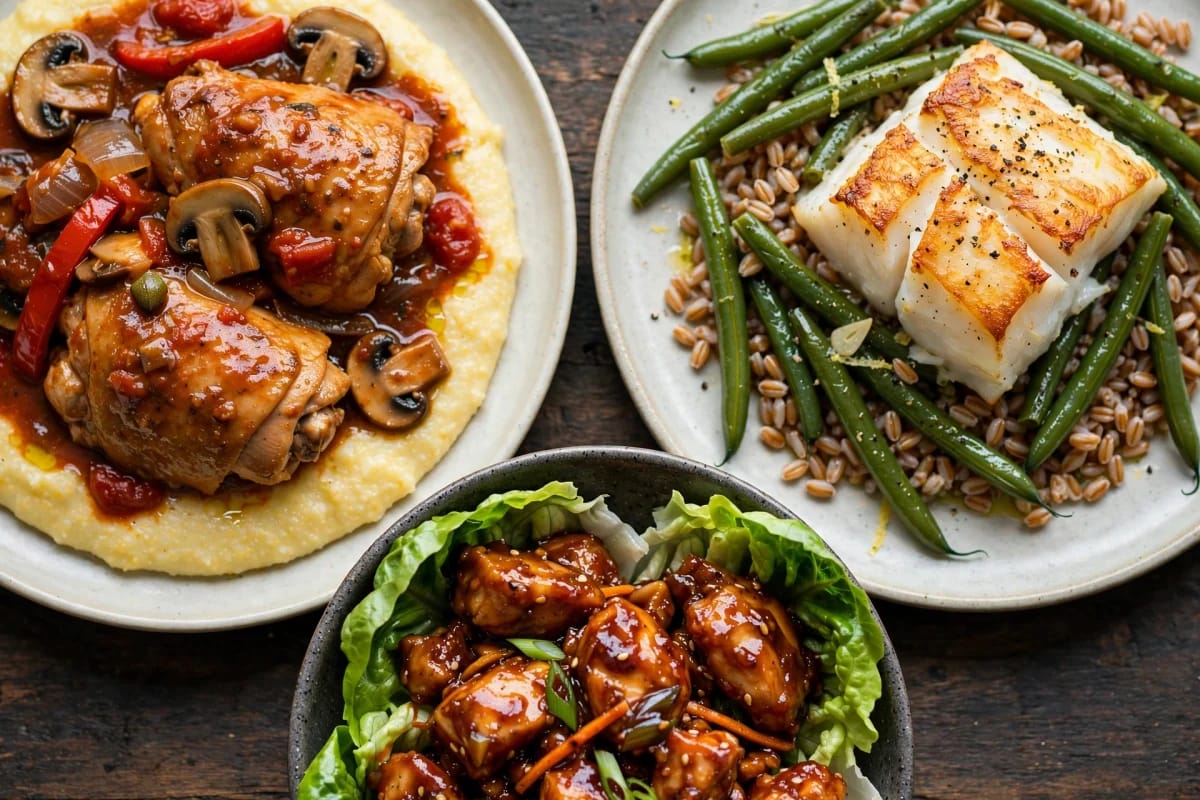
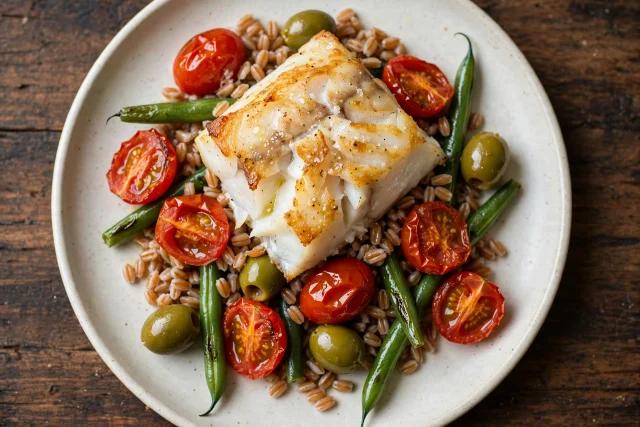
- Baked Cod with Farro and Green Beans: Cod fillets baked with lemon and herbs, served over chewy farro with green beans and cherry tomatoes. It is light enough for a late dinner and still substantial, and the farro keeps you full well past ten.
Snack:
- Labneh with Cucumber and Za'atar: Thick labneh spread across a small plate with cucumber batons, a thread of olive oil, and za'atar, eaten with a fork. It feels like a starter in a restaurant rather than something from a diet list, which is most of the battle.

Day 2
Breakfast:
- Egg and Kimchi Rice Bowl: A small bowl of brown rice topped with two fried eggs, kimchi, scallions, and a drop of sesame oil. The kimchi does all the seasoning work, and the eggs bring the protein without a scrap of meat, so the bowl costs almost nothing to put together.
Lunch:
- Gochujang Chicken Lettuce Wraps: Ground chicken browned with gochujang, garlic, and ginger, spooned into lettuce leaves with pickled carrot and cucumber. It is messy in the best way, and it holds around 35 grams of protein without a grain in sight.
Dinner:
- Tofu and Vegetable Jjigae with Brown Rice: Firm tofu simmered with mushrooms, zucchini, and kimchi in a light broth, served with a measured scoop of brown rice. It is a hot, comforting bowl that happens to be meat free, and it costs very little of the day's energy.
Snack:
- Roasted Seaweed with Almonds: A few sheets of roasted seaweed eaten alongside a small handful of almonds. Salty, crisp, and finished in two minutes, which is exactly what an afternoon snack needs to be on a day with no slack in it.

Day 3
Breakfast:
- Ricotta and Berry Breakfast Toast: Whole grain toast spread thick with ricotta and piled with berries and a few toasted almonds. It tastes like something ordered in a cafe and takes four minutes, and the ricotta carries far more protein than butter ever would.
Lunch:
- Tuna and Cannellini Salad with Lemon and Parsley: Tinned tuna folded through cannellini beans, red onion, parsley, and lemon with a little olive oil. It is the lunch to make when the fridge looks empty, and it delivers around 30 grams of protein straight from a tin.
Dinner:
- Chicken Cacciatore with Polenta: Chicken thighs braised with peppers, mushrooms, and tomatoes until the sauce thickens, spooned over soft polenta. It is a slow dish that reheats beautifully, and a small portion of polenta stretches a lot further than a pile of pasta.
Snack:
- Baked Parmesan Crisps with Red Grapes: Small piles of grated Parmesan baked until they crisp and cool, eaten with a handful of red grapes. The sweet and salty pairing feels generous, and it takes the place of a cheese board without any crackers at all.
Day 4
Breakfast:
- Thai Basil Omelet with Ground Chicken: Eggs beaten with fish sauce and folded around ground chicken, basil, and chili, cooked until just set. It is a proper savoury breakfast with about 30 grams of protein, and the whole thing comes together in one pan.
Lunch:
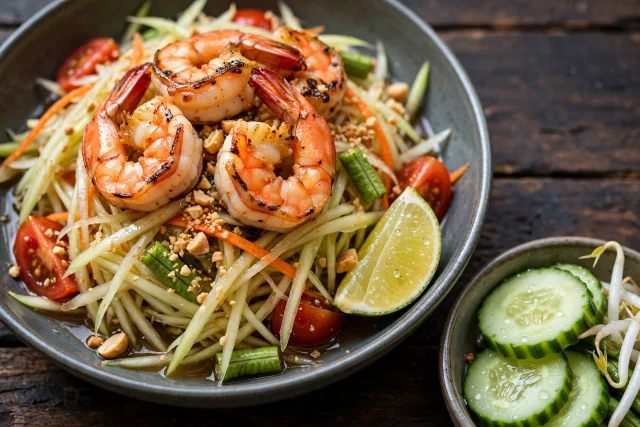
- Green Papaya Salad with Grilled Shrimp: Shredded green papaya with lime, fish sauce, chili, and crushed peanuts, topped with grilled shrimp. It is sharp and cold and wakes up a hot afternoon, and the shrimp keeps the protein exactly where it needs to be.
Dinner:
- Red Curry Chicken with Cauliflower Rice: Chicken simmered in red curry paste and coconut milk with green beans and peppers, served over cauliflower rice. The sauce tastes rich because coconut milk is rich, and the cauliflower keeps the bowl light enough for a weeknight.
Snack:
- Chia Pudding with Coconut Milk and Pineapple: Chia seeds soaked overnight in coconut milk and topped with diced pineapple and a little lime zest. It is creamy enough to pass for dessert, and the chia brings fibre along with its fat. It keeps three days in the fridge, so make two jars while you are already at it.

Day 5
Breakfast:
- Ethiopian Scrambled Eggs with Tomato and Berbere: Eggs scrambled with onion, tomato, and berbere until soft and fragrant, with a spoon of yogurt to cool it if you go heavy on the spice. It is spicy in a warm rather than hot way, and it turns a plain egg breakfast into something worth sitting down for.
Lunch:
- Misir Wot with Injera: Red lentils simmered with berbere, onion, and garlic until they collapse into a thick stew, eaten with injera. It is cheap, filling, and full of fibre, and it tastes better on the second day than the first.
Dinner:
- Doro Wat with Cauliflower and Rice: Chicken pieces braised in a deep berbere sauce with onion and ginger, served with cauliflower and a small portion of rice. The sauce is the whole point, and it takes a plain chicken dinner somewhere else entirely.
Snack:
- Spiced Roasted Pumpkin Seeds with Orange: Pumpkin seeds toasted with cumin and paprika, eaten with a peeled orange and a squeeze of it over the seeds. It is a two ingredient snack that covers crunch, salt, and something sweet all at once, and a pinch of flaky salt finishes the job.
Day 6
Breakfast:
- Spanish Tortilla with Spinach: Potato and onion cooked slowly in olive oil, folded through beaten eggs with spinach, and set in the pan until just firm. A wedge reheats well, and it makes a savoury breakfast that genuinely holds until lunch.
Lunch:
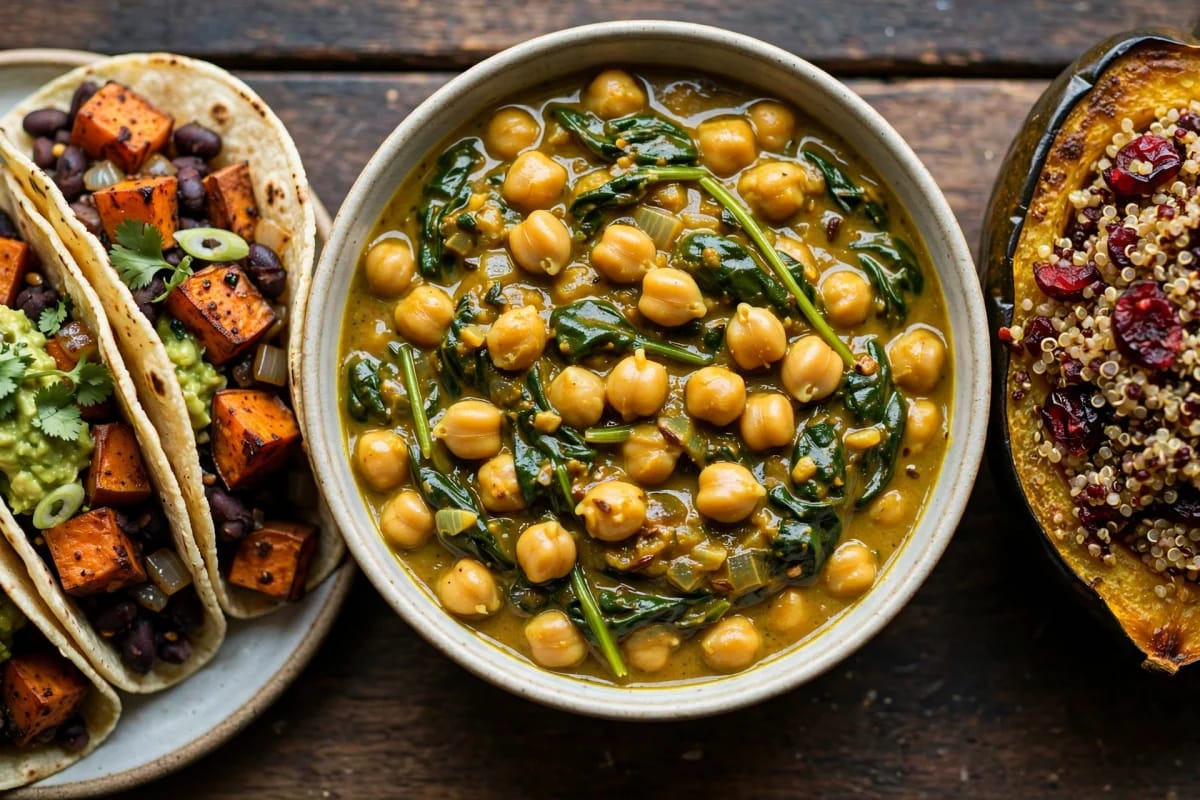
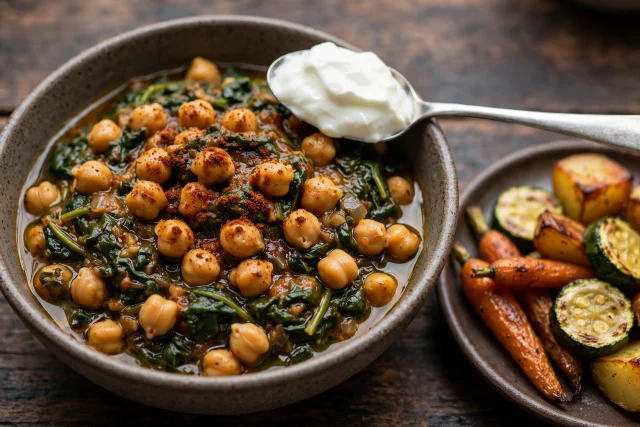
- Spanish Spinach and Chickpea Stew with Smoked Paprika: Spinach and chickpeas simmered with tomato, garlic, and smoked paprika until the broth thickens around the beans. It is a pantry lunch with real depth, and a spoon of yogurt on top makes it feel finished rather than frugal.
Dinner:
- Garlic Shrimp with Brown Rice and Peas: Shrimp seared with garlic and chili and tossed with brown rice, peas, and a squeeze of lemon. It cooks in ten minutes flat, which makes it the rescue dinner for a day that ran long and the one to keep in the freezer.
Snack:
- Orange and Marcona Almonds: A peeled orange with a small handful of Marcona almonds, eaten slowly rather than in one go. The almonds are richer than the usual kind, so a few are enough, and the orange takes care of the sweet craving without any help.
Day 7
Breakfast:
- Cottage Cheese Bowl with Peaches and Pecans: Cottage cheese with sliced peaches, toasted pecans, and a dusting of cinnamon, plus a thread of honey if the peaches are shy. It is 25 grams of protein before nine in the morning, and it needs no cooking at all.
Lunch:
- Turkey and Avocado Wrap with Slaw: Sliced turkey, avocado, and a sharp cabbage slaw rolled into a whole wheat wrap and cut in half. It travels well, eats with one hand, and keeps the protein high without a heavy dressing dragging it down.
Dinner:
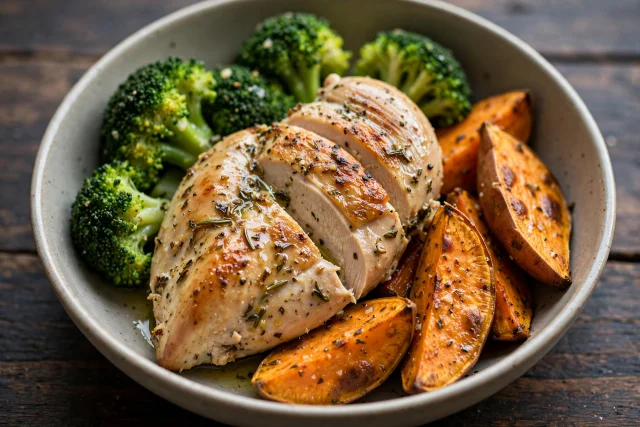
- Herb Roasted Chicken Breast with Sweet Potato and Broccoli: Chicken breast roasted with thyme and lemon, with sweet potato wedges and broccoli on the same tray. It is the plainest dinner of the week and often the one people repeat, because it needs no thinking at all.
Snack:
- Greek Yogurt with Honey and Pumpkin Seeds: Greek yogurt with a teaspoon of honey and a scatter of pumpkin seeds, eaten straight from the jar if the day is that kind of day. It is the last snack of the week and the easiest, and the seeds give it something to chew on.
Full Grocery List for Your Calorie Deficit Meal Plan
Everything below covers the twenty eight dishes in one main shop, with a midweek stop for shrimp and fresh fish. The list stays deliberately narrow, because a calorie deficit meal plan works best when the fridge holds the week and not a museum of good intentions.
Fruits
- Fresh Fruit: Lemons, limes, oranges, red grapes, peaches, pineapple, and mixed berries (the salads, the snacks, the pudding, and the breakfast toast).
Vegetables
- Leafy Greens and Salad: Spinach, lettuce, cucumber, cabbage, and green papaya (the wraps, the slaw, the salad, and the tortilla).
- Roots and Alliums: Potatoes, sweet potato, onion, garlic, ginger, carrot, zucchini, and cauliflower (the tortilla, the curry, the jjigae, and the tray bake).
- Peppers and Tomatoes: Red peppers, green beans, tomatoes, green chili, and mushrooms (the cacciatore, the menemen, the wot, and the cod).
Proteins
- Poultry: Boneless chicken thighs, ground chicken, and chicken breast (the shawarma, the wraps, the omelet, the curry, the wot, and the tray bake).
- Fish and Seafood: Cod fillets, raw shrimp, and tinned tuna (buy the fresh fish on the day you cook it).
- Eggs, Beans and Tofu: Eggs, red lentils, chickpeas, cannellini beans, and firm tofu (the menemen, the omelet, the tortilla, the wot, the stew, and the jjigae).
Dairy and Refrigerated
- Yogurt and Cheese: Greek yogurt, labneh, ricotta, cottage cheese, feta, and Parmesan (the breakfasts, the snacks, the crisps, and the finishes).
- Milks and Cream: Coconut milk and a little milk for the chia (two dishes only).
Grains and Bakery
- Rice and Grains: Brown rice, farro, polenta, rolled oats, and chia seeds (the bowls, the cod, the cacciatore, and the pudding).
- Bread and Wraps: Whole grain toast, whole wheat wraps, and injera (the menemen, the toast, the wrap, and the wot).
Pantry, Oils and Flavorings
- Oils and Condiments: Olive oil, sesame oil, fish sauce, soy sauce, and gochujang (the whole week).
- Spices and Pastes: Berbere, shawarma spice, smoked paprika, cumin, thyme, cinnamon, red curry paste, za'atar, honey, and kimchi (the braises, the bowls, and the snacks).
- Nuts and Seeds: Almonds, pecans, peanuts, pumpkin seeds, and Marcona almonds (the snacks and the finishes).
Healthy Alternatives for a Calorie Deficit Meal Plan
Cravings and real life both turn up in the middle of a careful month, and these five swaps keep the deficit intact without turning dinner into a lecture. Each one answers a moment rather than a food, and everything on the list is already in the shop above.
- When Dinner Has to Be Ready in Fifteen Minutes: Swap the cacciatore for garlic shrimp with brown rice and peas. You lose the slow braise and keep a full plate, and the shrimp is cooked before the rice finishes.
- When You Are Eating Out: Order a grilled protein and two vegetables, and ask for the sauce on the side. Restaurant plates often carry 800 calories before dessert, so choose the smaller portion rather than the salad you do not actually want.
- When You Want Something Sweet After Dinner: Have the chia pudding or a square of dark chocolate instead of a bowl of ice cream. Both come off the list above, and neither undoes a day that was otherwise steady.
- When You Are Travelling: Build a lunch from tinned tuna, a whole wheat roll, and a piece of fruit. It needs no kitchen and keeps the protein high enough to stop an airport sandwich from winning by default.
- When the Scale Stalls: Check your portions of oil, nuts, and cheese before you cut anything else. A heavy hand with olive oil can quietly erase a 400 calorie gap, and measuring for one week usually explains the plateau.
Start Your Calorie Deficit Meal Plan on a Steady Note
Weigh yourself once a week, on the same morning, and write the number down somewhere you will see it. Daily weighing turns normal water shifts into a verdict on your character, while weekly numbers show the trend that actually matters over a month.
Set the gap at 400 calories for the first fortnight and leave it there while the scale moves. A deficit you can hold for six months beats a bigger one you abandon in ten days, and the slower route is the one that keeps the muscle you already have.
Keep exploring with our plain spoken week for anyone starting out, steady blood sugar days built around protein and fibre, a gentler approach to balancing glucose at every meal, a higher calorie week with the same structure, and a different way of varying intake across the week, alongside a calorie deficit week worth saving and a careful plan for anyone watching their kidneys.
This article is for information only and is not medical advice. Read our full disclaimer.