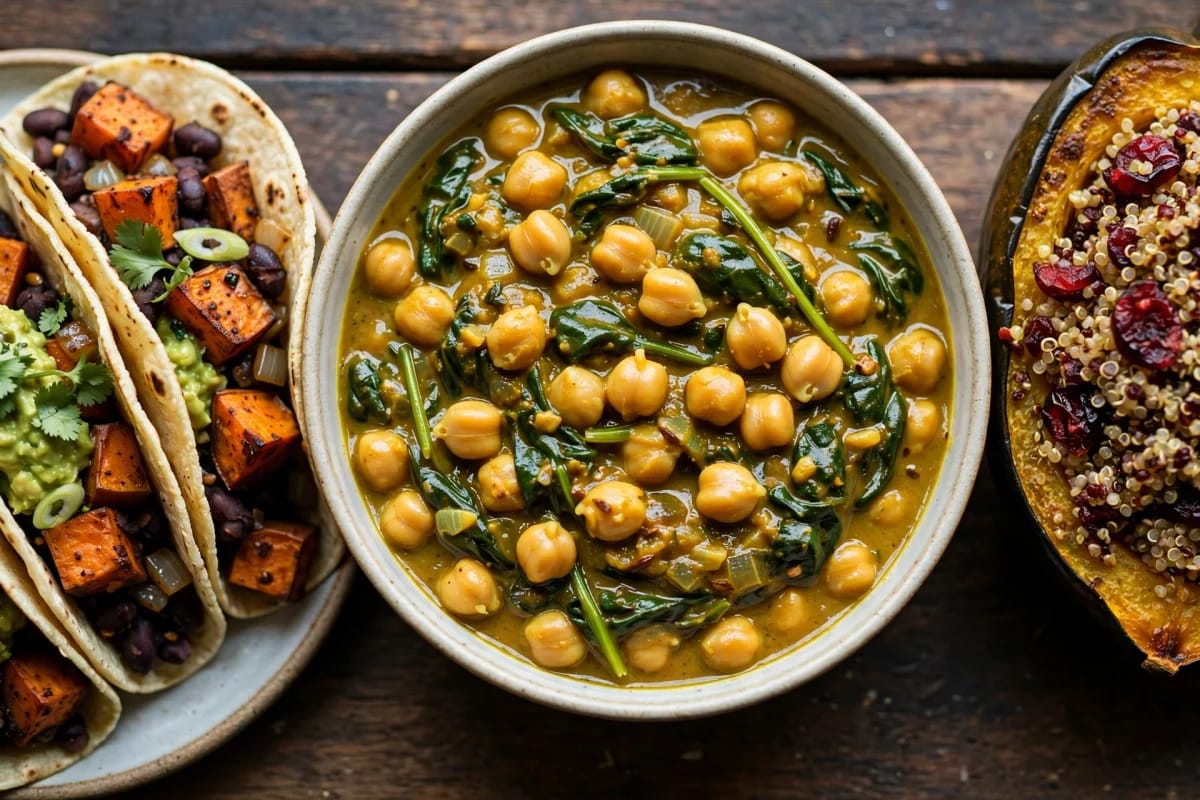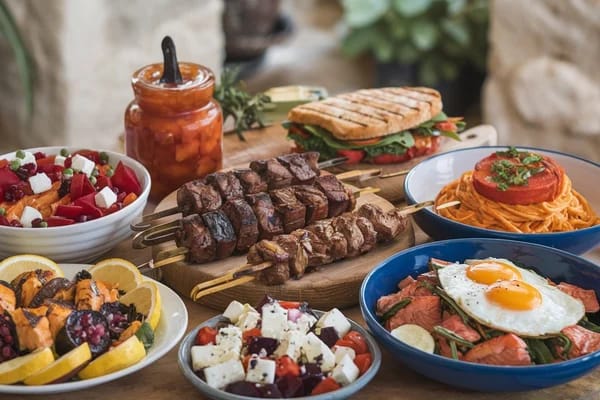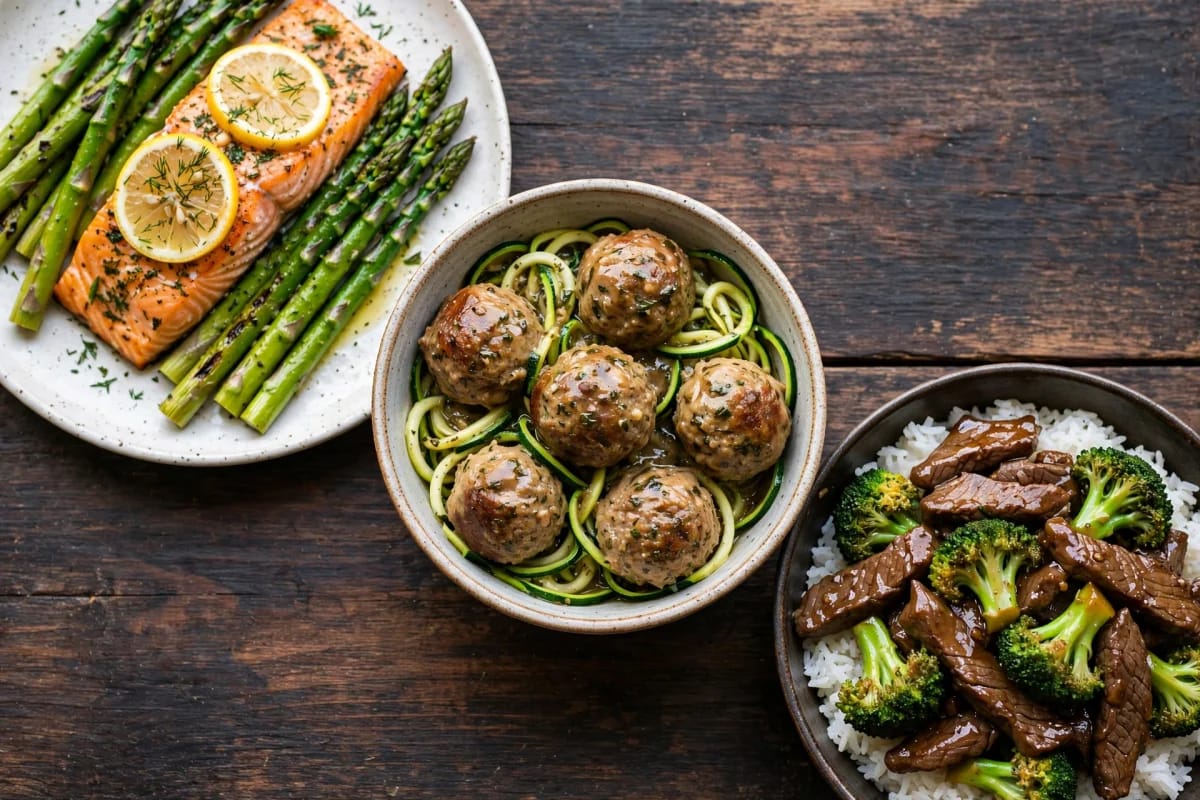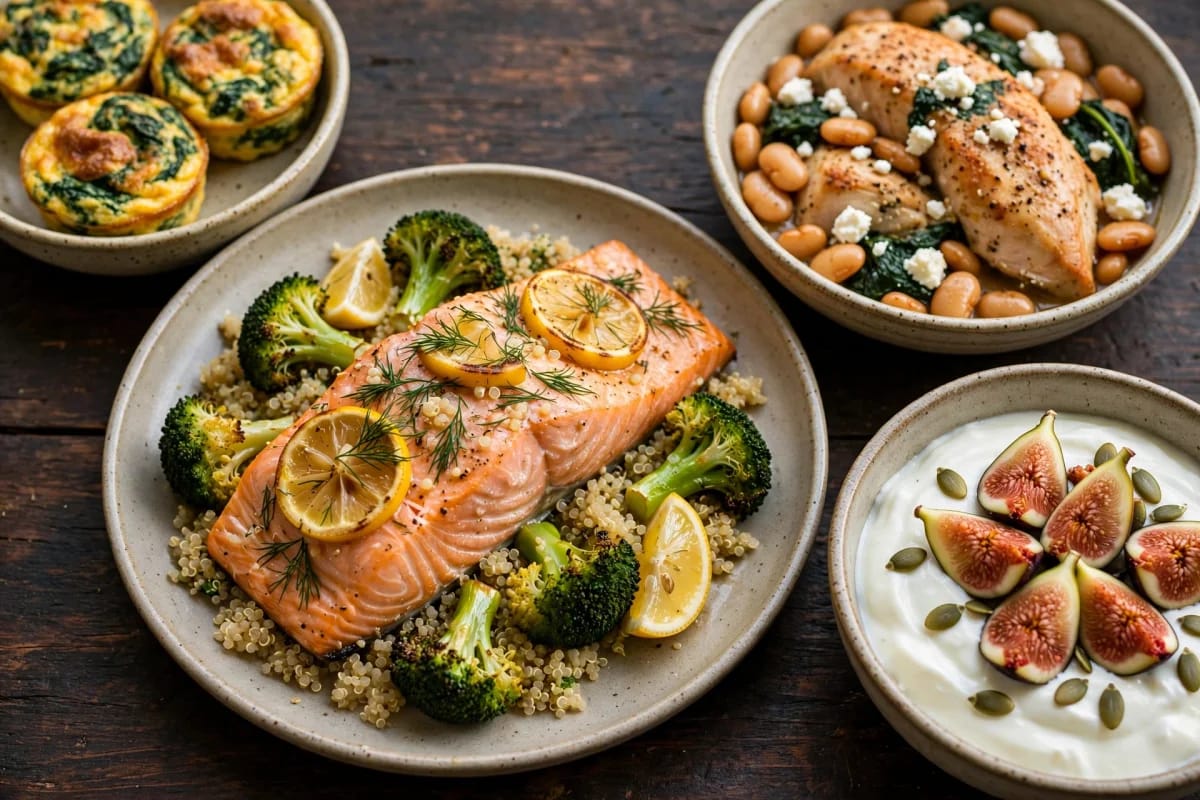
An osteopenia diet is a way of eating built to hand bone tissue the four things it uses to stay strong, which are calcium, vitamin D, vitamin K, and protein. Osteopenia means bone density sits below the expected range for your age, and food is one of the few levers you can pull yourself once a scan has put a number on it.
A 7 day bone health meal plan for osteopenia is a week of breakfasts, lunches, dinners, and snacks where all four of those nutrients appear at every meal. Eggs, oily fish, fortified dairy, calcium set tofu, greens, and legumes do the work, and the plates stay ordinary enough to cook on a weeknight after work.
This 7 day bone health meal plan for osteopenia includes salmon, mackerel, sardines, eggs, Greek yogurt, feta, milk, tofu, lentils, kale, broccoli, and sesame, with protein treated as a bone nutrient rather than a gym one. The one rule that shapes every plate is that calcium, vitamin D, vitamin K, and protein all have to be present at the same meal.
It suits women in the years around menopause, men past fifty, and anyone whose scan came back with a number worth watching. If you have kidney disease, take a blood thinner, or have broken a bone from a minor fall, your doctor and often a dietitian own the decisions, not a menu on a website.
The reason to eat this way is that bone remodels constantly, breaking down and rebuilding, and the food you eat supplies the minerals and the protein scaffolding that rebuilding runs on. No plate here changes a scan by itself, and the honest benefit is support alongside the walking, the lifting, and any medicine your clinician recommends.
Use the week however it lands. Cook the days out of order, keep the breakfast you actually enjoy, and trade a dinner for another one in the list when the fridge says so. This 7 day bone health meal plan for osteopenia is a set of useful plates, not a schedule you have to obey.
Key Principles of a Bone Health Diet for Osteopenia
The rules below are what turn an ordinary week of home cooking into one that supports bone density. They are about what every plate carries rather than what it leaves out, and they hold whether you eat meat, fish, or neither.
1. Four Things at Every Meal
Calcium, vitamin D, vitamin K, and protein all play a part in bone, so every meal this week carries some of each rather than saving them for one perfect dinner. Eggs with greens and cheese do that easily, and so does fish with beans and lemon. Skip one of the four and the meal is still food, it is simply not doing this particular job.
2. Treat Protein as a Bone Nutrient
Bone is roughly half protein by volume, and low protein intake makes rebuilding harder no matter how much calcium you eat. Eggs, fish, poultry, dairy, tofu, and legumes appear at every meal here, spread rather than stacked into dinner. Aim for a palm sized portion at each sitting, more if you are over sixty.
3. Get Vitamin D From Food and Daylight
Vitamin D is the nutrient food supplies least reliably, so this week leans on oily fish, egg yolks, mushrooms left in daylight, and fortified milk. Daylight on bare skin covers some of the rest, and a blood test tells you where you actually stand. Ask your doctor before adding a supplement, since the dose depends on your level.
4. Spread Calcium Evenly
Your gut absorbs calcium best in servings of roughly 500mg rather than one large dose, so this week places a source in every meal. Yogurt at breakfast, cheese or tahini at lunch, and fish, tofu, or greens at dinner is the pattern. A single milky drink in the morning will not cover a day, however large the glass.
5. Load the Plate With Greens
Vitamin K takes part in the proteins that bind calcium into bone, and dark greens are the easiest way to get it. Kale, spinach, broccoli, bok choy, mustard greens, and rocket all count, and they cook down to almost nothing in a pan. If you take warfarin, keep your intake steady and tell your clinic before changing it, as this guidance explains.
Your 7 Day Bone Health Meal Plan for Osteopenia Overview
This 7 day bone health meal plan for osteopenia features easy recipes leaning on oily fish, eggs, fortified dairy, and dark greens, carrying the calcium, vitamin D, vitamin K, and protein that bone tissue uses, and it is perfect for anyone cooking for one or two on a normal weeknight.
Day 1
Breakfast:
- Soft Boiled Eggs with Rye Soldiers and Fortified Milk: Two eggs boiled to a soft yolk, rye bread toasted into soldiers, and a glass of fortified milk beside them. Egg yolk carries vitamin D, the milk brings calcium, and the rye adds the fibre that keeps the morning steady.
Lunch:
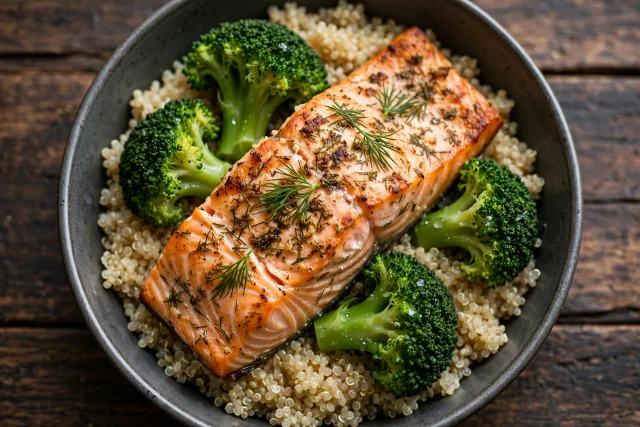
- Dill Roasted Salmon with Quinoa and Broccoli: Salmon roasted with dill and lemon, served over quinoa with broccoli that still has some bite. Salmon is the vitamin D source, broccoli brings calcium and vitamin K, and quinoa covers the protein.
Dinner:
- Slow Beef and Barley Stew with Carrots: Beef braised slowly with barley, carrots, and a little tomato until the meat gives way under a spoon. The barley and carrots add minerals, the beef brings protein and zinc, and the pot feeds you twice.
Snacks:
- Egg and Cheddar Muffin with Spinach: A muffin tin filled with egg, cheddar, and chopped spinach, baked until just set. Each one carries vitamin D, calcium, vitamin K, and protein in a single handful, which makes it the most efficient snack of the week.
Day 2
Breakfast:
- Egg Rice Bowl with Nori and Warm Soy Milk: Rice topped with soft scrambled egg, torn nori, and scallions, with warm fortified soy milk on the side. It is a five minute breakfast that covers the four nutrients without asking you to think before coffee.
Lunch:
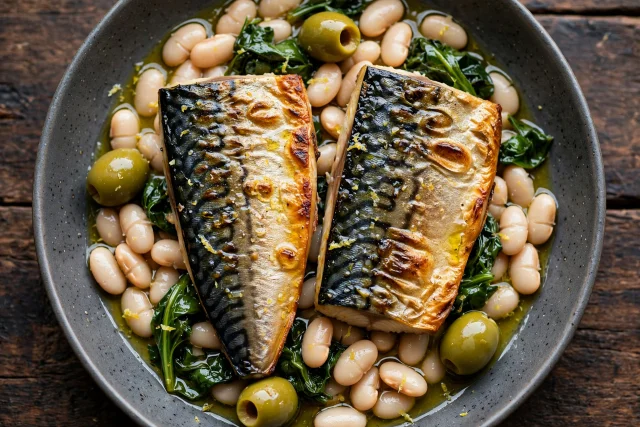
- Peppered Mackerel with White Beans and Wilted Greens: Mackerel fillets pan seared with black pepper, served over white beans and spinach wilted in the same pan. Mackerel is rich in vitamin D, the beans and greens add calcium and vitamin K, and the plate takes fifteen minutes.
Dinner:
- Tofu and Mushroom Hot Pot with Rice: Silken tofu and mushrooms simmered in a light dashi broth with greens, served with rice. Use calcium set tofu, and leave the mushrooms in daylight before cooking if you want the vitamin D bump they are known for.
Snacks:
- Edamame with Sea Salt and Lemon: A bowl of edamame pods steamed and tossed with sea salt and lemon zest. They take four minutes, they carry protein and calcium, and the podding gives your hands something to do at the end of the day.
Day 3
Breakfast:
- Huevos Rancheros with Queso Fresco: Fried eggs on warm corn tortillas with a spoon of tomato salsa and crumbled queso fresco. The eggs bring vitamin D and protein, the cheese brings calcium, and the salsa keeps the whole plate from feeling heavy.
Lunch:
- Chicken and Kale Tacos with Crema: Shredded chicken and wilted kale in warm tortillas with a lime crema and pickled onion. Kale carries vitamin K, the crema adds calcium, and the chicken makes it a lunch that holds until dinner.
Dinner:
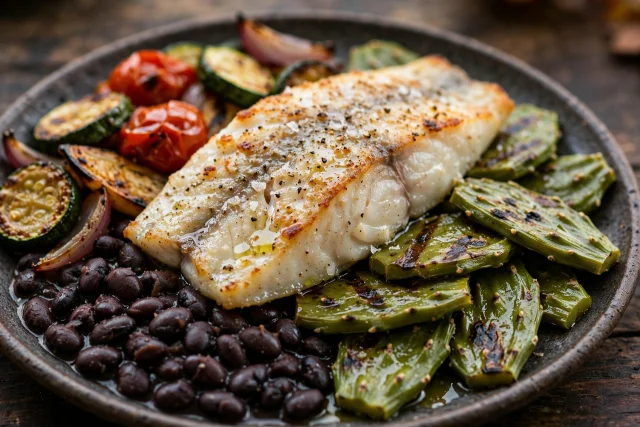
- Baked Fish with Nopales and Black Beans: White fish baked with lime and paprika, served with grilled nopales and black beans. Nopales are a quiet calcium source, the beans add protein and fibre, and the fish brings vitamin D to the plate.
Snacks:
- Cheese and Almond Bites with Dried Apricots: Cubes of aged cheddar with almonds and a few dried apricots. It is a snack you can build in a minute, it covers calcium and protein without any cooking, and it travels in a coat pocket on a cold walk.
Day 4
Breakfast:
- Ragi Porridge with Fortified Milk and Almonds: Ragi flour cooked into hot fortified milk with chopped almonds and a date for sweetness. Finger millet is unusually high in calcium, and the milk and almonds push the same meal further without any sugar.
Lunch:
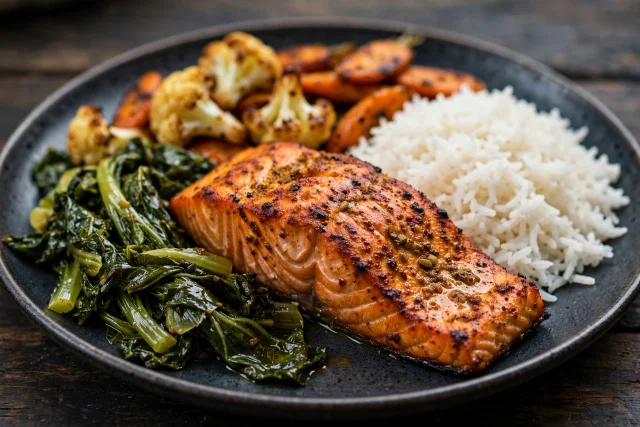
- Tandoori Salmon with Mustard Greens and Rice: Salmon marinated in yogurt and tandoori spices, roasted and served with mustard greens and rice. The salmon brings vitamin D, the greens bring vitamin K, and the yogurt marinade adds calcium before the fish even hits the oven.
Dinner:
- Lamb and Spinach Kofta Curry with Yogurt: Spiced lamb and spinach kofta simmered in a tomato curry, finished with yogurt stirred in at the end. The lamb covers protein, the spinach covers vitamin K, and the yogurt adds calcium without curdling.
Snacks:
- Yogurt with Toasted Sesame and Kiwi: Thick yogurt with toasted sesame and diced kiwi. Sesame is dense with calcium, the yogurt adds more, and the kiwi gives the bowl enough sharpness to feel like a real snack rather than a substitute.
Day 5
Breakfast:
- Greek Yogurt with Figs and Pumpkin Seeds: Greek yogurt with chopped figs and a scatter of pumpkin seeds. It takes a minute, it carries calcium and protein, and the figs make it sweet enough that nobody at the table asks for jam.
Lunch:
- Sardine and Tomato Toast with Rocket: Sardines mashed onto toasted sourdough with tomato, lemon, and rocket. The bones in the sardines are the whole point, and the rocket adds vitamin K on top of a lunch that takes five minutes.
Dinner:
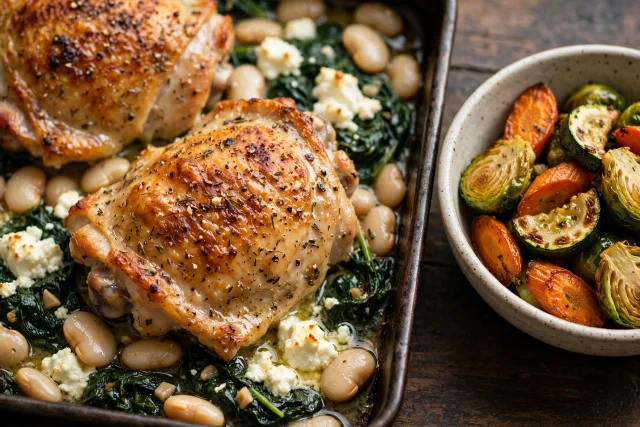
- Baked Chicken with Feta, Spinach and Butter Beans: Chicken thighs baked with tomatoes, butter beans, spinach, and feta until the cheese softens over everything. It is one tray, it covers all four nutrients, and the beans make it filling without more meat.
Snacks:
- Cottage Cheese with Chives and Rye Crisps: Cottage cheese with chopped chives and a few rye crisps for scooping. It is high in protein and calcium, and it works as a late afternoon snack or a light supper on a night when cooking is too much.
Day 6
Breakfast:
- Egg and Millet Porridge with Groundnuts: Millet cooked into a soft porridge with a poached egg on top and groundnuts scattered over. The egg brings vitamin D and protein, the millet and nuts add minerals, and the bowl keeps you going until lunch.
Lunch:
- Groundnut and Spinach Stew with Millet: A peanut and tomato stew with a lot of spinach wilted through it, served with millet. The peanuts bring protein, the spinach brings vitamin K, and the stew is even better the next day.
Dinner:
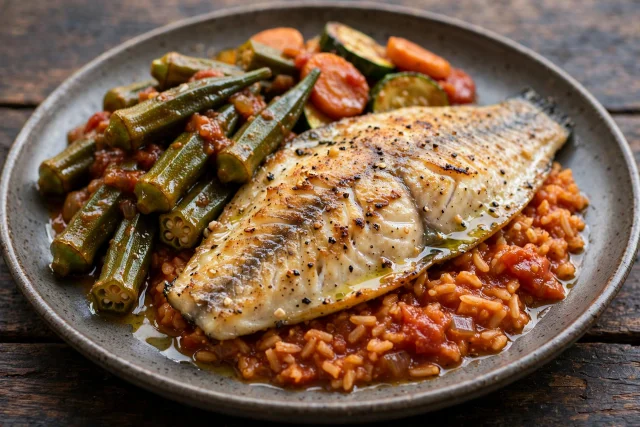
- Baked Tilapia with Okra and Tomato Rice: Tilapia baked with ginger and chilli, served with okra stewed in tomato and a scoop of rice. Okra and tomato add vitamin K and minerals, and the fish keeps the plate light at the end of the day.
Snacks:
- Mushroom and Egg Broth Cup: A small cup of hot broth with sliced mushrooms and a soft boiled egg. Mushrooms left in daylight carry some vitamin D, and the egg makes it a snack that actually holds you until the next meal.
Day 7
Breakfast:
- Baked Eggs with Spinach and Parmesan: Eggs baked in a small dish with spinach and parmesan until the whites set and the cheese browns at the edges. It is a slow breakfast for a day off, and it covers all four nutrients in one dish.
Lunch:
- Tuna and White Bean Bowl with Lemon: Tuna with white beans, cucumber, tomato, and a lemon and parsley dressing. The beans and tuna carry protein and calcium, and the bowl is the kind of lunch that survives being made the night before.
Dinner:
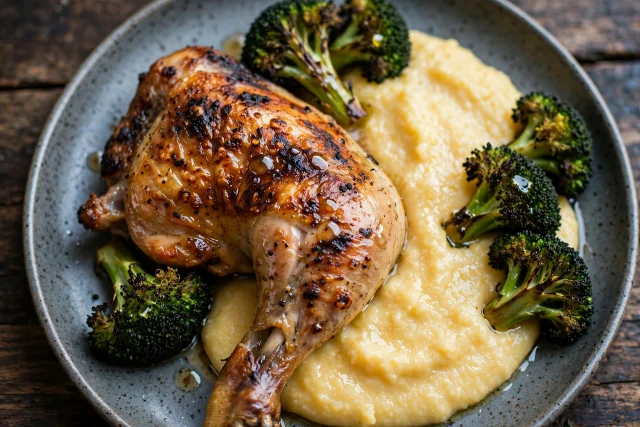
- Roast Chicken with Broccoli and Polenta: Chicken roasted with lemon and thyme, served with charred broccoli and soft polenta. The chicken covers protein, broccoli covers calcium and vitamin K, and the polenta makes it a proper Sunday plate.
Snacks:
- Ricotta with Honey and Toasted Almonds: Ricotta with honey and toasted almonds, eaten cold from the fridge. It carries calcium and protein, it needs no cooking, and it ends the week on something that tastes like a treat rather than a task.
Your Complete Grocery List for a Bone Health Diet
Everything below covers the twenty eight dishes in one main shop, with a midweek stop for fish and greens. Buy the eggs and the fortified milk first, since those two carry more of this week than anything else on the list.
Fruits
- Dried Fruit: Dried figs, apricots, and dates, kept in a jar by the kettle (the yogurt bowl, the cheese snack, and the porridge).
- Fresh Fruit: Lemons, limes, kiwi, tomatoes, and a cucumber (the fish, the tuna bowl, the yogurt snack, and the crema).
Vegetables
- Dark Greens: Kale, spinach, mustard greens, rocket, and broccoli, the vitamin K engine of the week (the tacos, the kofta, the toast, the chicken tray, and the roast).
- Others: Mushrooms, okra, nopales, spring onions, garlic, ginger, and a bag of frozen peas for a fast side (the hot pot, the tilapia, the fish, and the egg bowl).
Proteins
- Fish and Meat: Salmon, mackerel, sardines, tilapia, white fish, beef stewing steak, chicken thighs, and one whole chicken or jointed pieces (the roast, the stew, the curry, and the fish plates).
- Dairy and Eggs: Eggs by the dozen, Greek yogurt, cottage cheese, ricotta, feta, cheddar, parmesan, and fortified milk (every single day of the week).
- Plant Protein: Calcium set tofu, white beans, butter beans, black beans, edamame, peanuts, and millet (the hot pot, the bowls, the stew, and the snacks).
Grains and Bakery
- Rice and Grains: Jasmine rice, quinoa, polenta, barley, and ragi flour (the bowls, the salmon, the chicken, the stew, and the porridge).
- Bread: Rye bread, sourdough, corn tortillas, and rye crisps (the eggs, the sardine toast, the tacos, and the cottage cheese).
Nuts, Seeds and Fats
- Nuts and Seeds: Almonds, sesame, pumpkin seeds, peanuts, and groundnuts (the porridge, the yogurt, the muffins, and the stew).
- Oils: Olive oil, a little butter, and a jar of honey (the roasts, the eggs, and the ricotta).
Pantry and Flavorings
- Spices and Pastes: Tandoori masala, paprika, dill, thyme, chilli, dashi powder, and tomato salsa (the whole week).
- Store Cupboard: Tinned tomatoes, tinned white beans as backup, and a small jar of chives (the curry, the tray bake, and the snack).
Easy Food Swaps for Osteopenia Meals
The five swaps below answer the moments that make a bone friendly week fall apart, from a night with no energy to a lunch eaten standing up. Each one keeps the four nutrients in place and uses food already on the list above. For more plates built this way, these Mediterranean bowl dinners follow the same pattern.
- When You Cannot Face Cooking: Open a tin of sardines onto toast and add a handful of rocket, or warm the leftover stew. Both take five minutes, both still carry calcium and protein, and neither asks you to chop an onion at eight in the evening.
- When Breakfast Has to Happen on the Train: Take two of the egg muffins and a small carton of fortified milk instead of the porridge. You lose the warm bowl and keep every nutrient, and the pair fits in a bag without leaking.
- When Greens Taste Like a Chore: Stir the spinach into the kofta curry and the kale into the tacos rather than serving either on the side. They cook down, they disappear into the sauce, and the vitamin K still arrives without a pile of leaves on the plate.
- When You Want Something Creamy: Spoon the ricotta with honey and almonds instead of reaching for a dessert, or warm milk with a date if it is late. Both feel indulgent, both carry calcium, and neither undoes the day.
- When Dairy Leaves You Bloated: Build the meal on sardines, mackerel, calcium set tofu, tahini, almonds, and greens, and use fortified plant milk in the porridge. The calcium still lands, and the rest of the plate does not change at all.
Getting Started With This Osteopenia Meal Plan
Start with the eggs and the fish, because those two habits do the most work in the first week. Boil a batch of eggs on the day you shop and cook one oily fish dinner early, so the pattern is established before a busy Wednesday tests it.
Add the movement your clinician recommends, since food supports bone and loading it through walking and resistance work is what tells the tissue to rebuild. Keep a note of what you eat and how you feel, and bring that note to your next appointment rather than trying to interpret a scan alone.
Keep exploring with our weeks for joints that ache, a plain look at what physiotherapy adds, small devices that make a home safer, and why absorption matters more than the label, alongside a fast chicken dinner for low energy nights and a lighter week worth reading alongside this one.
This article is for information only and is not medical advice. Read our full disclaimer.